Blog and News
What Is the Best Industrial Flooring for Orlando Warehouses and Manufacturing Plants?
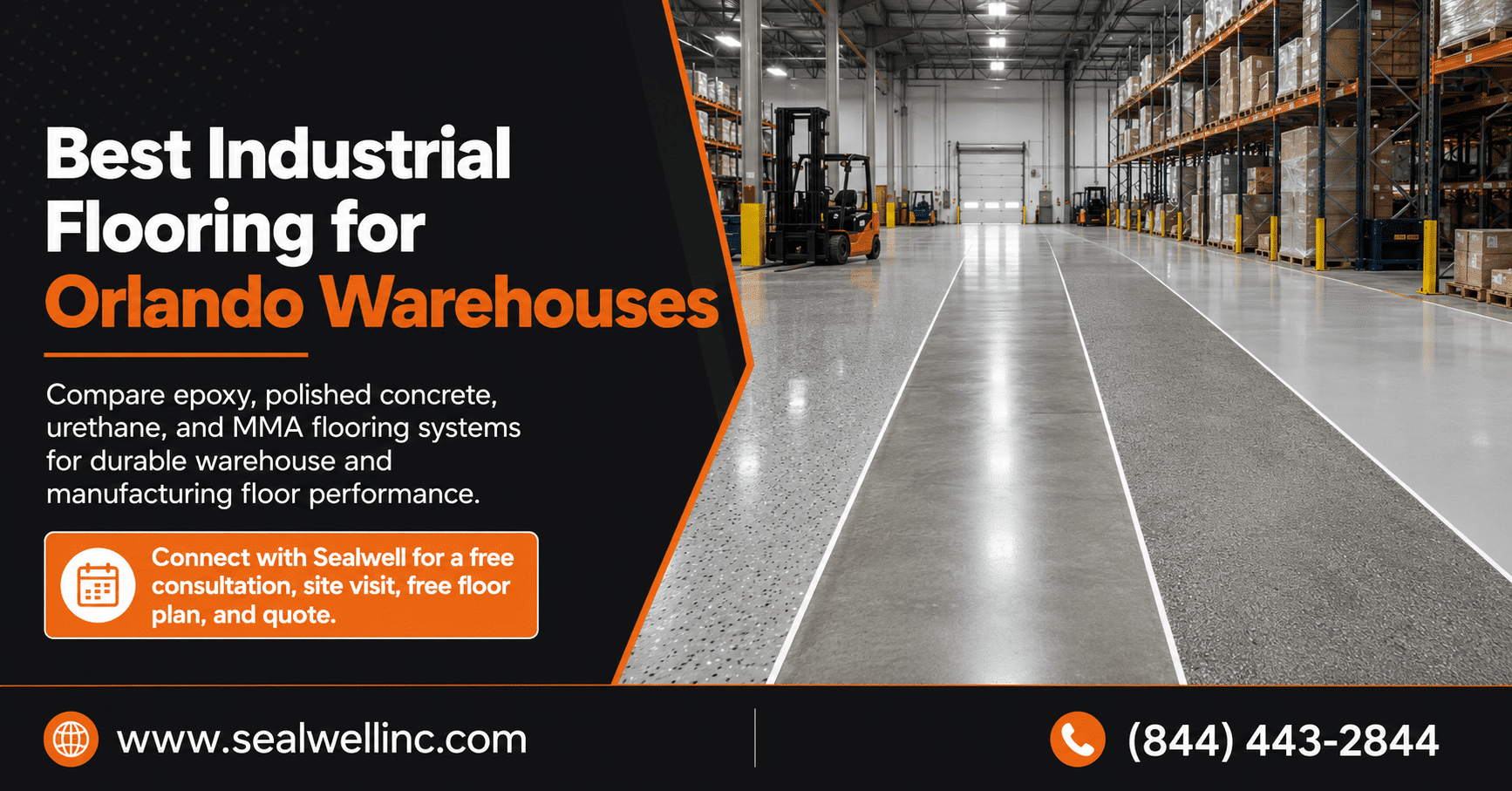
Industrial Flooring Orlando solutions for warehouses and manufacturing plants should be durable, low-maintenance, slip-resistant, moisture-resistant, and strong enough to handle forklifts, pallet jacks, heavy equipment, production traffic, chemicals, and daily cleaning. The best flooring system depends on the facility’s use, concrete condition, traffic level, moisture exposure, downtime limits, and long-term maintenance goals.
For many Orlando industrial facilities, the most common flooring options include epoxy flooring, polished concrete, polyurethane systems, urethane cement, MMA acrylic flooring, and heavy-duty concrete coatings. Each option has different strengths, so the right choice should be based on real site conditions rather than a one-size-fits-all recommendation.
Why Flooring Matters in Orlando Industrial Facilities
Warehouses and manufacturing plants rely on strong floors every day. The floor supports equipment movement, inventory storage, production lines, loading zones, employee traffic, cleaning routines, and safety markings. If the floor begins to crack, peel, dust, stain, or become slippery, it can affect productivity, safety, and maintenance costs.
In Orlando, industrial floors may also deal with humidity, rainwater near dock areas, moisture vapor from concrete slabs, frequent cleaning, and high traffic. These conditions make flooring selection especially important. A flooring system that performs well in a dry, low-traffic space may not be the right option for a busy warehouse or manufacturing environment.
A properly selected industrial floor can help:
- Protect concrete from damage
- Reduce dust and surface wear
- Improve cleanability
- Support safer movement
- Resist moisture and chemicals
- Reduce long-term repair costs
- Improve facility appearance
- Support better workflow and organization
Key Flooring Challenges in Orlando Warehouses
Warehouse floors experience constant pressure from forklifts, pallet jacks, carts, racks, shipping activity, and loading operations. Over time, untreated or poorly protected concrete may become dusty, cracked, stained, or uneven.
Common warehouse flooring challenges include:
- Forklift tire wear
- Pallet jack abrasion
- Loading dock impact
- Oil or fluid spills
- Moisture near entrances
- Heavy inventory loads
- Dusting concrete
- Worn traffic lanes
- Poor visibility of walkways or safety zones
The best warehouse flooring should be tough enough for daily traffic while remaining easy to clean and maintain.
Key Flooring Challenges in Manufacturing Plants
Manufacturing plants often need flooring that can handle more than traffic. Depending on the facility, floors may be exposed to chemicals, oils, production residue, vibration, thermal changes, cleaning products, machinery weight, and moving equipment.
Manufacturing flooring must support:
- Heavy machinery
- Production line traffic
- Chemical resistance
- Worker safety
- Easy cleaning
- Impact resistance
- Equipment movement
- Moisture control
- Slip resistance
- Long-term performance
Because manufacturing environments vary widely, the flooring system should be customized to the specific operation.
Epoxy Flooring for Orlando Warehouses and Manufacturing Plants
Epoxy flooring is one of the most common industrial flooring options because it creates a durable, seamless, and protective surface over concrete. It is often used in warehouses, manufacturing plants, service areas, automotive spaces, and industrial buildings.
Benefits of Epoxy Flooring
Epoxy flooring can provide:
- Strong concrete protection
- Abrasion resistance
- Chemical and stain resistance
- Easy cleaning
- Improved appearance
- Slip-resistant texture options
- Safety line and traffic zone customization
- Long-term durability
Epoxy is a strong choice for Orlando facilities that need a cost-effective industrial floor with good durability and cleanability. It can be customized with different thicknesses, colors, textures, topcoats, and safety markings.
When Epoxy Flooring Is Best
Epoxy flooring may be the right choice for:
- Warehouses
- Manufacturing plants
- Equipment rooms
- Automotive service areas
- Storage facilities
- Distribution centers
- Production spaces
- Commercial garages
However, epoxy requires proper surface preparation and curing time. If a facility has limited downtime, a faster-curing system may be considered.
Polished Concrete for Industrial Facilities
Polished concrete is another popular option for warehouses and industrial spaces. It uses the existing concrete slab and mechanically grinds, hardens, and polishes the surface to create a smooth, durable finish.
Benefits of Polished Concrete
Polished concrete can offer:
- Low maintenance
- Long service life
- Dust reduction
- Clean professional appearance
- Improved light reflectivity
- Strong performance under foot traffic and some equipment traffic
- No thick coating layer to peel
Polished concrete may be a good choice for facilities that want a clean, durable surface with lower maintenance needs. It is often used in warehouses, retail-industrial spaces, showrooms, logistics areas, and commercial buildings.
When Polished Concrete Is Best
Polished concrete may be suitable for:
- Warehouses with moderate traffic
- Showrooms
- Distribution spaces
- Storage facilities
- Light manufacturing areas
- Facilities wanting a clean concrete finish
However, polished concrete may not be the best choice when the floor needs strong chemical protection, heavy slip resistance, or protection from frequent spills and washdowns.
Polyurethane Flooring Systems
Polyurethane flooring systems are often selected when facilities need more flexibility, abrasion resistance, and resistance to certain chemicals or cleaning conditions. They can be useful in manufacturing, food-related spaces, and industrial environments where the floor experiences frequent use.
Polyurethane systems may help with:
- Abrasion resistance
- Chemical exposure
- Flexibility
- Impact resistance
- Long-term wear performance
- Cleaner surface maintenance
In some cases, polyurethane topcoats are used over epoxy systems to improve abrasion resistance, UV stability, or chemical performance.
Urethane Cement for Wet or Demanding Industrial Areas
Urethane cement flooring is commonly used in environments exposed to moisture, hot water, washdowns, thermal shock, and food-related operations. It is often selected for food processing, commercial kitchens, beverage plants, and wet manufacturing areas.
Benefits of Urethane Cement
Urethane cement can provide:
- Moisture resistance
- Thermal shock resistance
- Chemical resistance
- Seamless installation
- Slip-resistant texture
- Strong durability in wet areas
- Easy cleaning
For Orlando facilities with wet processing areas, frequent cleaning, or temperature changes, urethane cement may be a better option than basic coatings.
MMA Acrylic Flooring for Fast-Cure Needs
MMA acrylic flooring is known for fast cure performance. It may be selected when a facility needs rapid return to service, phased installation, or reduced shutdown time.
MMA flooring can be useful for:
- Active facilities
- Cold storage areas
- Freezer rooms
- Food facilities
- Production spaces with limited downtime
- Retail-industrial environments
- Urgent repair or upgrade projects
One advantage of MMA flooring is that some systems are designed to cure quickly, which can help facilities return to operation faster. However, MMA can have a noticeable odor during installation and usually requires trained installers and proper ventilation planning.
How to Choose the Best Industrial Flooring System
The best industrial flooring system depends on how the facility operates. Before choosing a floor, facility managers should review the following factors.
1. Traffic Level
A warehouse with forklifts and pallet jacks needs a stronger flooring system than a light storage area. Heavy traffic zones may need thicker coatings, stronger topcoats, or added abrasion resistance.
2. Chemical Exposure
Manufacturing plants may deal with oils, solvents, cleaning chemicals, production liquids, or other materials. The flooring system should be selected based on the chemicals used in the facility.
3. Moisture Conditions
Orlando facilities may experience humidity, rainwater near docks, slab moisture, washdowns, or wet cleaning. Moisture testing and proper system selection can help prevent coating failure.
4. Slip Resistance
Wet floors, dust, oils, and traffic can create slip risks. Industrial floors can be customized with textures or aggregates to improve traction.
5. Downtime Limits
Some facilities can close for several days, while others need overnight, weekend, or phased installation. Cure time should be part of the planning process.
6. Concrete Condition
Cracks, weak concrete, old coatings, contamination, and uneven areas must be addressed before installation. Proper preparation is essential for long-term performance.
7. Maintenance Requirements
The floor should match the facility’s cleaning routine. A low-maintenance system can reduce labor, improve appearance, and extend floor life.
Why Surface Preparation Is Critical
Even the best industrial flooring system can fail if the concrete is not properly prepared. Surface preparation helps the new system bond correctly and perform over time.
Preparation may include:
- Concrete inspection
- Moisture testing
- Grinding
- Shot blasting
- Degreasing
- Crack repair
- Joint repair
- Patching
- Old coating removal
- Surface profiling
Poor preparation can lead to peeling, bubbling, delamination, uneven finish, or premature wear. A professional installation team should always evaluate and prepare the slab before applying the flooring system.
Best Flooring by Facility Type
|
Facility Type |
Recommended Flooring Options |
|
Warehouse |
Epoxy flooring, polished concrete, heavy-duty coatings |
|
Manufacturing plant |
Epoxy, polyurethane, urethane cement, polished concrete |
|
Food production area |
Urethane cement, MMA flooring, seamless resin flooring |
|
Cold storage |
MMA flooring, urethane systems |
|
Automotive or service area |
Epoxy flooring, polyurethane topcoats |
|
Wet processing area |
Urethane cement, slip-resistant resin flooring |
|
High-traffic loading zone |
Heavy-duty epoxy, polyurethane, or reinforced coating systems |
Why Sealwell Team Experts?
Sealwell helps Orlando warehouses and manufacturing plants choose industrial flooring systems based on real facility needs. Our team can inspect your existing concrete, review traffic patterns, identify moisture concerns, evaluate chemical exposure, and recommend the right flooring solution for durability, safety, cleanability, and long-term performance.
Whether your facility needs epoxy flooring, polished concrete, urethane cement, MMA acrylic flooring, or a customized industrial floor coating system, Sealwell can help you plan a practical solution that supports daily operations.
Why Sealwell Team Experts? Connect with Sealwell team for free consultation, visit and with a free floor plan and quote.
For businesses looking for durable, low-maintenance, and professionally installed Industrial Flooring Orlando, choosing the right system can protect concrete, reduce repair costs, improve safety, and support long-term facility performance.
FAQs
What is the best industrial flooring for Orlando warehouses?
The best industrial flooring for Orlando warehouses depends on traffic, equipment use, moisture, and maintenance needs. Epoxy flooring, polished concrete, and heavy-duty concrete coatings are common options for warehouses because they support durability, cleanability, and daily traffic.
What flooring is best for manufacturing plants?
Manufacturing plants often need epoxy, polyurethane, urethane cement, or MMA acrylic flooring depending on chemical exposure, machinery, cleaning routines, moisture, and downtime requirements. A site inspection helps determine the right system.
Is epoxy flooring good for Orlando industrial facilities?
Yes. Epoxy flooring is a strong option for many Orlando industrial facilities because it can protect concrete, resist abrasion, improve appearance, and support heavy commercial use. It can also be customized with slip-resistant textures and safety markings.
Is polished concrete suitable for warehouses?
Polished concrete can be suitable for warehouses that need a durable, low-maintenance, and professional-looking floor. It works well in many storage, logistics, and distribution spaces, but it may not be ideal for areas with heavy chemical exposure or frequent washdowns.
What is the most durable industrial flooring?
The most durable industrial flooring depends on the facility environment. Heavy-duty epoxy, polyurethane systems, urethane cement, MMA flooring, and polished concrete can all perform well when properly matched to traffic, chemicals, moisture, and temperature conditions.
How do I choose industrial flooring for a warehouse?
To choose industrial flooring for a warehouse, consider forklift traffic, pallet jack movement, loading dock activity, moisture, surface condition, safety needs, cleaning routines, and downtime limits. The selected system should match real operational demands.
Why does surface preparation matter before installing industrial flooring?
Surface preparation helps the flooring system bond properly to the concrete. If dust, old coatings, cracks, oil, grease, moisture, or weak concrete are not addressed, the floor may peel, bubble, crack, or fail early.
How long does industrial flooring last?
Industrial flooring can last for many years when properly installed and maintained. Lifespan depends on the flooring system, traffic level, chemical exposure, surface preparation, cleaning routine, and ongoing maintenance.
Can industrial flooring be installed without shutting down operations?
In some cases, yes. Depending on the facility and flooring system, work may be completed in phases, after hours, on weekends, or with fast-cure systems such as MMA flooring to help reduce downtime.
Why should Orlando businesses work with Sealwell for industrial flooring?
Sealwell helps Orlando businesses choose flooring systems based on facility needs, traffic, moisture, chemicals, safety, and long-term performance. The team can inspect the concrete, recommend the right system, and provide a practical flooring plan for warehouses and manufacturing plants.
Our trusted clients: