
Blog and News
What Causes Commercial Floor Coatings to Peel or Fail?
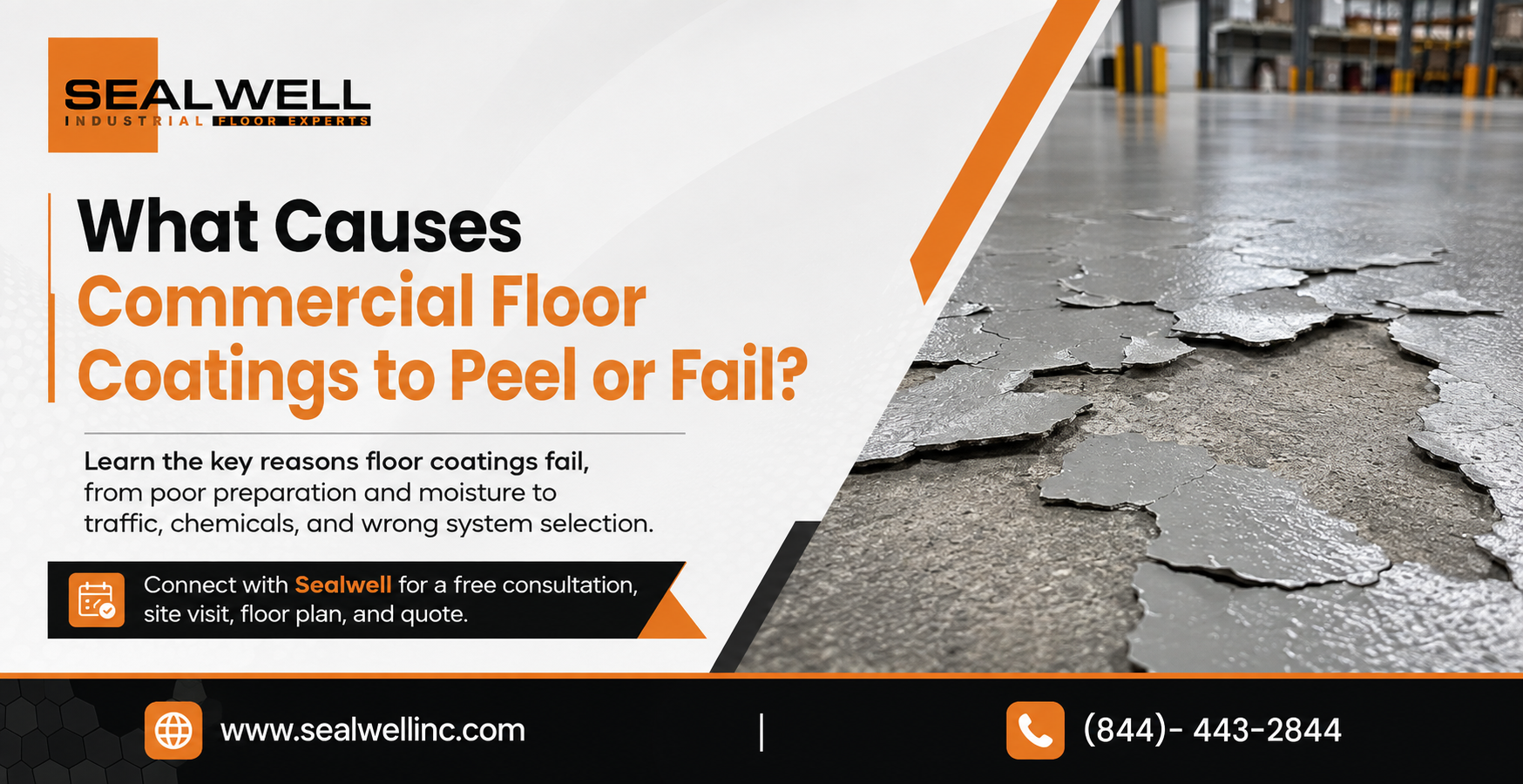
Commercial floor coatings can peel or fail when the concrete surface is not properly prepared, moisture is trapped beneath the coating, the wrong flooring system is selected, or the coating is exposed to more traffic, chemicals, heat, or cleaning stress than it was designed to handle. In most cases, coating failure is not caused by one issue alone. It usually happens when poor preparation, moisture, weak concrete, improper installation, and unsuitable product selection work together over time.
For commercial and industrial facilities, floor coating failure can create safety concerns, cleaning challenges, downtime, repair costs, and a poor appearance. Understanding why coatings peel, bubble, crack, or delaminate can help facility managers choose the right flooring system from the beginning.
Why Commercial Floor Coating Failure Matters
Commercial floors are more than a surface. They support daily operations, employee movement, equipment traffic, customer access, sanitation routines, and overall facility performance. When a coating begins to peel or fail, the problem can spread quickly.
A small peeling section can expose the concrete underneath. Once the concrete is exposed, moisture, dirt, oils, chemicals, and cleaning liquids can enter the floor. This can make the damage worse and increase the chance of larger repairs later.
Common signs of floor coating failure include:
- Peeling or flaking coating
- Bubbling or blistering
- Cracking or chipping
- Soft or sticky areas
- Discoloration
- Worn traffic lanes
- Coating lifting from the concrete
- Dusting or weak concrete below the surface
- Moisture stains or dark spots
The good news is that many of these issues can be prevented with proper floor evaluation, surface preparation, system selection, installation, and maintenance.
- Poor Surface Preparation
Poor surface preparation is one of the most common causes of commercial floor coating failure. A coating needs a clean, strong, and properly profiled concrete surface to bond correctly.
If the concrete is not prepared properly, the coating may sit on top of dust, grease, old coating, dirt, adhesive, weak concrete, or surface contamination. This prevents strong adhesion and can cause peeling or delamination.
Proper preparation may include:
- Grinding
- Shot blasting
- Degreasing
- Removing old coatings
- Repairing cracks
- Filling joints
- Patching damaged concrete
- Removing loose or weak surface material
- Creating the right concrete profile for bonding
Skipping or rushing preparation may reduce project time in the short term, but it often leads to costly failure later.
- Moisture in the Concrete Slab
Moisture is another major reason floor coatings peel or fail. Concrete may look dry on the surface, but moisture vapor can still move through the slab from below.
When a coating is installed over concrete with excessive moisture, pressure can build beneath the coating. This may cause bubbles, blisters, peeling, or full coating separation from the slab.
Moisture problems may come from:
- Ground moisture beneath the slab
- Missing or damaged vapor barriers
- Recent concrete pours that have not dried enough
- High humidity
- Water intrusion
- Poor drainage
- Frequent washdowns
- Refrigerated or wet facility conditions
Moisture testing before installation is important. If moisture is present, the flooring contractor may recommend a moisture mitigation system, vapor barrier primer, breathable system, or different flooring solution.
- Installing the Wrong Flooring System
Not every commercial floor coating is right for every facility. A system that works well in a retail store may not be suitable for a food production area, warehouse, commercial kitchen, auto shop, cold storage room, or manufacturing plant.
Floor coating failure can happen when the system is not matched to the environment.
For example:
- A thin coating may fail under forklift traffic.
- A basic coating may not resist harsh chemicals.
- A smooth coating may become unsafe in wet areas.
- A standard epoxy may not perform well in extreme thermal shock conditions.
- A slow-curing system may not work for facilities with limited shutdown time.
The best flooring system should be selected based on traffic, chemicals, moisture, temperature, cleaning routine, safety needs, and downtime requirements.
- Weak or Damaged Concrete
A floor coating is only as strong as the concrete below it. If the concrete is weak, dusty, cracked, spalling, uneven, or contaminated, the coating may fail even if the product itself is high quality.
Weak concrete can cause coating problems because the coating bonds to the top layer of the slab. If that layer breaks apart, the coating may lift with it.
Common concrete issues include:
- Surface dusting
- Spalling
- Cracks
- Holes
- Uneven areas
- Broken joints
- Oil contamination
- Old adhesive residue
- Previous coating failure
Before applying a new coating, the existing concrete should be inspected and repaired. This helps create a stronger foundation for long-term performance.
- Oil, Grease, and Chemical Contamination
Commercial and industrial floors often come into contact with oils, grease, solvents, food ingredients, cleaning chemicals, automotive fluids, and production materials. If these contaminants are present before coating installation, they can prevent proper adhesion.
Even after installation, harsh chemicals can damage the wrong coating system. Some chemicals may soften, stain, discolor, or weaken the surface if the floor is not designed for that exposure.
This is especially important for:
- Automotive shops
- Manufacturing plants
- Commercial kitchens
- Food and beverage facilities
- Laboratories
- Chemical storage areas
- Warehouses
- Maintenance bays
A chemical-resistant flooring system should be selected when chemical exposure is part of daily operations.
- Improper Mixing or Application
Commercial floor coatings must be mixed, applied, and cured correctly. If the product is not handled according to manufacturer guidelines, performance can be affected.
Application issues may include:
- Incorrect mix ratio
- Poor mixing time
- Applying too thick or too thin
- Coating over contaminated concrete
- Applying outside the recommended temperature range
- Not allowing proper cure time
- Using the wrong primer
- Skipping required layers
- Poor ventilation
- Reopening the floor too soon
Professional installation matters because every coating system has specific application requirements. Experienced installers know how to manage site conditions, surface preparation, coating thickness, cure time, and return-to-service planning.
- Temperature and Humidity Problems
Temperature and humidity can affect how a floor coating cures. If conditions are too cold, too hot, or too humid, the coating may not cure properly. This can lead to weak bonding, bubbling, soft areas, poor finish quality, or early wear.
In humid climates and temperature-sensitive facilities, it is important to check:
- Slab temperature
- Air temperature
- Relative humidity
- Dew point
- Ventilation
- Moisture vapor movement
- Cure time requirements
The flooring system should be selected and installed according to site conditions. For fast-turnaround or low-temperature spaces, systems such as MMA flooring may be considered when rapid curing and low-temperature application are required.
- Heavy Traffic and Equipment Wear
Commercial floor coatings can fail when they are exposed to more traffic than they were designed to handle. A light-duty coating may look good at first, but it may not survive forklifts, pallet jacks, carts, rolling racks, vehicles, or heavy equipment.
High-wear areas include:
- Loading docks
- Warehouse aisles
- Production zones
- Turning areas
- Entrances
- Service bays
- Commercial kitchens
- Retail walkways
- Equipment staging areas
These areas may require stronger resin systems, thicker build, heavy-duty topcoats, slip-resistant additives, or regular maintenance plans.
- Poor Drainage or Standing Water
Standing water can shorten the life of a commercial floor coating. Water may collect around drains, sinks, washdown areas, coolers, loading docks, and production spaces.
If water sits on the surface for long periods, it can increase slip risks, weaken damaged coating areas, and allow moisture to enter cracks or exposed concrete.
Facilities with wet conditions should consider:
- Proper floor slope
- Drain repair
- Seamless flooring
- Cove base installation
- Slip-resistant texture
- Moisture-resistant systems
- Regular inspection around drains
A floor coating system should be designed around how water moves through the facility.
- Lack of Maintenance
Even durable commercial floors need regular maintenance. A coating may fail early if spills are ignored, harsh cleaners are used, or small damaged areas are not repaired.
Basic maintenance should include:
- Daily sweeping or dust removal
- Routine wet cleaning
- Fast spill cleanup
- Approved cleaning products
- Regular inspection of high-traffic areas
- Repairing chips and cracks early
- Recoating worn areas when needed
A proactive maintenance plan can extend the life of the floor and reduce unexpected repair costs.
How to Prevent Commercial Floor Coating Failure
The best way to prevent peeling or failure is to start with a professional floor assessment. A flooring expert should inspect the slab, review the facility environment, understand daily operations, and recommend the right system.
Before installation, the team should consider:
- Concrete condition
- Moisture levels
- Surface contamination
- Traffic type
- Chemical exposure
- Cleaning routine
- Temperature and humidity
- Drainage
- Slip resistance needs
- Downtime limits
- Long-term maintenance expectations
A successful floor coating project is not only about choosing a product. It is about choosing the right system, preparing the surface correctly, installing it professionally, and maintaining it properly.
Why Sealwell Team Experts?
Sealwell helps commercial and industrial facilities avoid floor coating failure with practical flooring recommendations, professional surface preparation, and system selection based on real site conditions. Our team can inspect your existing concrete, identify moisture or adhesion concerns, review traffic and chemical exposure, and recommend the right flooring solution for your business.
Whether your floor is peeling, bubbling, cracking, wearing down, or ready for a new coating system, Sealwell can help you plan a durable, safe, and long-lasting flooring solution.
Why Sealwell Team Experts? Connect with Sealwell team for free consultation, visit and with a free floor plan and quote.
For businesses looking to protect concrete, reduce maintenance issues, and prevent coating failure, Commercial Floor Coatings should be professionally selected, prepared, installed, and maintained for long-term performance.
FAQs About Commercial Floor Coating Failure
Why do commercial floor coatings peel?
Commercial floor coatings often peel because of poor surface preparation, moisture in the concrete slab, contamination, weak concrete, or the wrong coating system.
What causes bubbles in epoxy or floor coatings?
Bubbles can form when moisture vapor moves through the concrete, air becomes trapped during application, or the coating is installed in poor temperature or humidity conditions.
Can moisture cause floor coating failure?
Yes. Moisture is one of the most common causes of coating failure. Excessive moisture vapor can cause blistering, bubbling, peeling, and delamination.
How can I prevent commercial floor coating failure?
You can prevent failure by testing for moisture, preparing the concrete properly, repairing damaged areas, choosing the right coating system, and using professional installation.
Does poor surface preparation cause peeling?
Yes. If dust, grease, old coating, weak concrete, or contaminants remain on the surface, the coating may not bond properly and can peel.
What is delamination in floor coatings?
Delamination happens when the coating separates from the concrete surface. It is often caused by moisture, poor adhesion, contamination, or weak concrete.
Can heavy traffic damage commercial floor coatings?
Yes. Forklifts, pallet jacks, vehicles, carts, and heavy equipment can damage coatings that are not designed for that level of traffic.
How long should commercial floor coatings last?
The lifespan depends on the coating system, surface preparation, traffic, chemicals, maintenance, and site conditions. Professionally installed systems can last for many years with proper care.
Should old coatings be removed before applying a new coating?
In many cases, failing or poorly bonded old coatings should be removed before a new system is installed. A flooring professional can inspect the surface and recommend the right preparation method.
When should I repair or replace a failing floor coating?
You should address peeling, bubbling, cracks, exposed concrete, or worn traffic lanes as soon as possible. Early repairs can help prevent larger and more expensive flooring problems.
Our trusted clients: