
ELECTROSTATIC DISCHARGE (ESD) FLOORING
Electrostatic Discharge (ESD) Flooring: Control Static. Protect Equipment. Keep Operations Moving.
Electrostatic Discharge (ESD) Flooring is engineered for facilities where uncontrolled static electricity can damage sensitive electronics, interfere with critical processes, or create operational and safety concerns.
Unlike conventional flooring, an ESD flooring system is designed to provide a controlled path for electrostatic charges to dissipate toward ground. When properly specified as part of an overall static-control program, it can help protect sensitive components, equipment, personnel, and production environments.
Sealwell provides industrial and commercial ESD flooring solutions tailored to the specific operational requirements of your facility. From electronics manufacturing and laboratories to data centers and advanced manufacturing environments, our team evaluates the existing concrete substrate, traffic, operating conditions, and static-control requirements before recommending a flooring system.
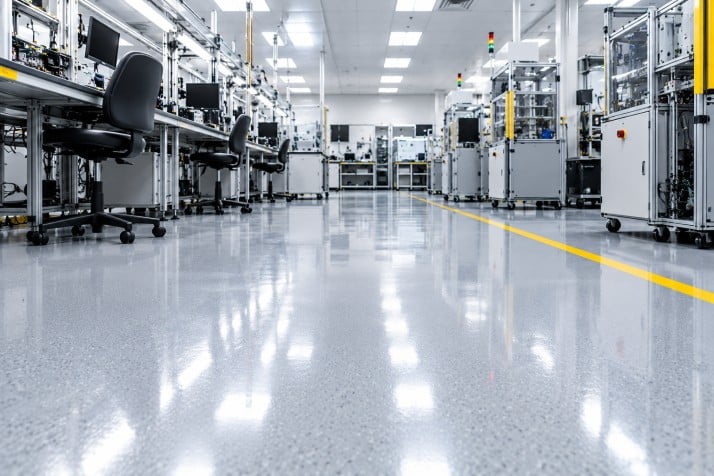
Why an ELECTROSTATIC DISCHARGE (ESD) FLOORING System?
ELECTROSTATIC DISCHARGE (ESD) FLOORING provides an important layer of protection in facilities where static-sensitive equipment, electronic components, automated systems, or critical processes are part of everyday operations.
Static electricity can build up as people, carts, equipment, and materials move through a facility. When that accumulated charge suddenly transfers between objects at different electrical potentials, an electrostatic discharge occurs.
In ordinary environments, this may be little more than a noticeable shock. In an electronics manufacturing facility, laboratory, data center, or other controlled environment, however, ESD can contribute to damaged components, product defects, equipment disruption, and costly downtime.
An appropriately designed ESD flooring and footwear system helps provide a controlled electrical path for personnel and accumulated static charge. The correct solution depends on the facility’s processes, grounding strategy, footwear, environmental conditions, maintenance requirements, and applicable ESD-control standards.
Key Advantages of ESD Flooring
Helps Control Static Electricity
ESD flooring is designed to help manage accumulated electrostatic charges and provide a controlled path toward ground as part of an appropriately designed static-control system.
Protects Static-Sensitive Components
Sensitive electronics, circuit boards, semiconductors, controls, and other components can be vulnerable to electrostatic discharge. An ESD control floor can become an important part of the facility’s overall protection strategy.
Supports ESD Control Programs
Proper flooring selection can support a broader ESD control program. ANSI/ESD S20.20 establishes administrative and technical requirements for organizations handling ESD-sensitive electronic parts, assemblies, and equipment.
Seamless Industrial Surface
Resinous ESD flooring can provide a smooth, seamless surface suited to demanding commercial and industrial operations while eliminating many of the joints associated with traditional tile flooring.
Durable for Demanding Facilities
A properly selected system can combine static-control properties with the durability required for pedestrian traffic, carts, equipment, and everyday industrial operations.
Easier Cleaning & Maintenance
Seamless surfaces simplify routine cleaning by reducing joints and seams where dirt and contaminants can accumulate.
Long-Term Facility Protection
Professional substrate preparation, proper grounding, correct system selection, installation, testing, and maintenance can help create a reliable flooring system designed around the facility’s long-term operational requirements.
Conductive vs. Static-Dissipative ESD Flooring
Not every facility requires the same level of electrical resistance.
Conductive flooring provides relatively low electrical resistance and allows static charge to move rapidly toward ground.
Static-dissipative flooring provides controlled resistance that allows accumulated charge to dissipate rather than remain on a person or surface.
Selecting between these systems should not be based on flooring alone. The ESD Association notes that flooring and footwear need to function together as a system when controlling electrostatic charge on personnel.
Sealwell can assess your application, operating environment, substrate, traffic conditions, maintenance needs, and ESD requirements to help determine an appropriate flooring system.
Industries & Applications for ESD Flooring
ESD flooring is commonly considered for environments where controlling static electricity is important to equipment protection, product quality, operational reliability, or process requirements.
Typical industries and applications include:
- Electronics Manufacturing & Assembly – Production areas handling circuit boards, semiconductors, electronic components, sensors, and other static-sensitive devices.
- Data Centers & Server Rooms – Areas containing servers, network equipment, controls, and other critical electronic infrastructure.
- Electric Vehicle & Battery Manufacturing – Manufacturing and assembly environments involving sophisticated electronics, control systems, and battery-related processes.
- Aerospace & Defense Facilities – Production, assembly, testing, and maintenance environments involving sensitive electronic components and precision equipment.
- Laboratories & Research Facilities – Controlled environments containing sensitive instruments, electronic testing equipment, and specialized processes.
- Pharmaceutical & Medical Device Facilities – Production and controlled processing areas requiring durable, cleanable flooring and appropriate static management.
- Cleanrooms & Controlled Environments – Areas where contamination control and electrostatic management may both form part of facility requirements.
- Telecommunications Facilities – Rooms and operational areas containing communications, networking, and electronic equipment.
- Robotics & Automation Facilities – Advanced manufacturing environments using automated equipment, sensors, controls, and electronic systems.
- Packaging & Processing Areas – Operations where movement of materials, equipment, and personnel can contribute to static buildup.
- Plastic Manufacturing Facilities – Production environments where certain materials and processes can generate static electricity.
- Testing & Quality-Control Areas – Spaces where sensitive products, instruments, or electronic components are inspected and tested.
ESD Flooring Designed Around Your Facility
Choosing an ESD floor involves more than selecting a coating.
An effective system starts with understanding the condition of the existing concrete, operational traffic, static-control objectives, grounding requirements, environmental conditions, cleaning procedures, and the equipment or components being protected.
Sealwell approaches industrial flooring as a complete process:
Floor Evaluation → Surface Preparation → Repairs → System Selection → ESD Flooring Installation → Testing & Final Review
Proper surface preparation is particularly important. The existing concrete must be evaluated and mechanically prepared as required to establish a suitable substrate for the specified flooring system.
Frequently Asked Questions(FAQs)
What is ESD flooring?
ESD flooring, or electrostatic discharge flooring, is a specialized static-control flooring system designed to help safely dissipate electrostatic charges toward ground. It is commonly used in facilities containing static-sensitive electronic components, equipment, or processes.
How does ESD flooring work?
An ESD flooring system provides a controlled electrical path that helps accumulated static charge dissipate. In personnel-grounding applications, the performance of the floor should be considered together with appropriate footwear and the facility’s overall grounding and ESD-control program.
What is the difference between ESD flooring and anti-static flooring?
The terms are sometimes used interchangeably, but they do not necessarily describe the same performance. Anti-static flooring generally refers to flooring intended to reduce static generation, while properly designed ESD flooring provides a controlled path for dissipating accumulated electrostatic charge.
What is the difference between conductive and static-dissipative flooring?
The primary distinction is electrical resistance. Conductive flooring has lower resistance, while static-dissipative flooring allows charge to dissipate through a controlled resistance range. The appropriate system depends on the facility’s processes and ESD-control requirements.
Where is ESD flooring commonly installed?
Common applications include electronics manufacturing plants, data centers, laboratories, cleanrooms, pharmaceutical and medical-device facilities, aerospace facilities, EV manufacturing operations, telecommunications rooms, robotics facilities, and other static-sensitive environments.
Can ESD flooring help protect electronic equipment?
Yes. When correctly specified, grounded, installed, and incorporated into an appropriate ESD control program, static-control flooring can help manage electrostatic charge that could otherwise affect ESD-sensitive components and equipment.
Does ESD flooring comply with ANSI/ESD S20.20?
ANSI/ESD S20.20 establishes requirements for an overall ESD control program rather than simply identifying a floor as compliant on its own. Flooring selection, footwear, grounding, qualification, verification, and other control elements should be evaluated according to the applicable requirements.
Does ESD flooring need to be tested?
Testing is an important part of determining whether the installed flooring or flooring/footwear system meets the electrical performance requirements established for a facility’s ESD control program. Testing requirements should be determined according to the applicable specification or standard.
Can ESD flooring be installed over existing concrete?
Often, yes, provided the concrete is suitable for the specified system. Existing concrete should first be inspected for moisture, contamination, cracks, damage, previous coatings, and other conditions that could affect installation or performance.
How do I know which ESD flooring system my facility needs?
The right system depends on factors such as the components or equipment being protected, required resistance range, grounding requirements, footwear, traffic, substrate condition, environmental conditions, chemical exposure, maintenance procedures, and applicable ESD standards. A professional site evaluation is the best starting point.
Why Sealwell for ESD Flooring?
Controlling static electricity requires more than applying another coating to your concrete.
Sealwell brings extensive industrial and commercial flooring experience to the complete process—from evaluating existing concrete and preparing the substrate to recommending and installing a flooring system suited to the facility’s operational requirements.
Our approach focuses on proper floor evaluation, professional surface preparation, system selection, installation quality, durability, and long-term performance.
Whether you are developing a new electronics production area, upgrading a laboratory, renovating a data center, or replacing an existing static-control floor, Sealwell can help you develop a solution around your facility requirements.
Let’s Discuss Your ESD Flooring
Protect your sensitive equipment, critical processes, and facility with an ESD flooring solution designed for your operational environment.
Complete the form on this page to request a flooring evaluation and discuss your ESD flooring requirements with Sealwell.

Our trusted clients: