Blog and News
How Do You Choose the Right Industrial Flooring for Your Business?
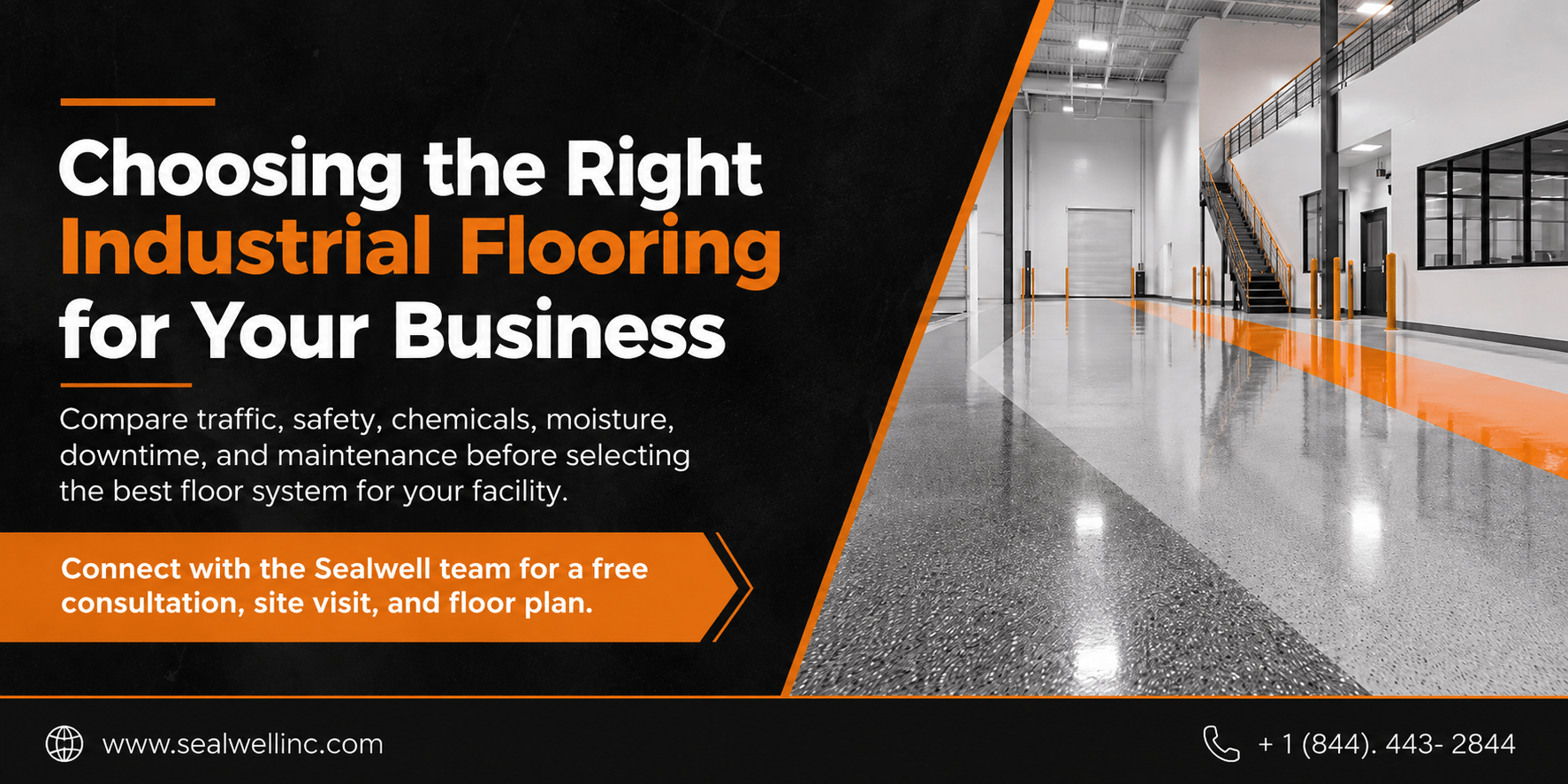
Choosing the right industrial floor is one of the most important facility decisions a business can make. Your floor supports people, equipment, inventory, cleaning routines, safety requirements, and daily operations. If the wrong system is selected, it can lead to cracking, peeling, dusting, staining, slipping hazards, maintenance problems, and costly downtime.
For businesses planning Industrial Flooring in Florida, the decision is even more important because local conditions such as humidity, moisture, heat, heavy rain, and slab vapor can affect flooring performance. A floor that works well in one building may not be the right fit for another.
The best industrial flooring system should match your facility’s use, traffic level, environmental conditions, cleaning process, safety needs, and long-term maintenance goals. Sealwell helps businesses evaluate these factors so they can choose a practical, durable, and cost-effective flooring solution.
Start with How Your Facility Is Used
The first step is understanding how your floor is used every day. Industrial flooring should never be selected based on appearance alone. A warehouse floor, food production floor, automotive service floor, and healthcare support floor all have different requirements.
Before choosing a system, ask:
- What type of business operates in the space?
- Does the floor handle forklifts or pallet jacks?
- Are there chemical spills or cleaning agents?
- Is the area wet, dry, hot, or temperature-controlled?
- Does the space need slip resistance?
- Are there hygiene or sanitation requirements?
- How often is the floor cleaned?
- How much downtime can the business allow?
- Does the floor need safety markings or traffic lanes?
The answers help determine whether epoxy, urethane, polished concrete, or another system is the best fit.
Consider Traffic and Load Requirements
Traffic is one of the biggest factors in industrial flooring selection. Floors in high-traffic environments must handle constant wear without failing early.
Common traffic types include:
- Forklifts
- Pallet jacks
- Carts
- Heavy machinery
- Vehicle traffic
- Foot traffic
- Rolling racks
- Cleaning equipment
A light commercial space may only need a standard floor coating or polished concrete finish. A heavy-duty manufacturing plant or distribution center may need a thicker epoxy system, urethane cement, or an industrial-grade coating designed for impact and abrasion resistance.
If your facility has concentrated load points, heavy equipment, or busy traffic lanes, those areas should be reviewed carefully before the flooring system is selected.
Evaluate Moisture and Florida Humidity
Moisture is a major concern for industrial floors in Florida. Concrete may look dry, but moisture vapor can still move through the slab. If this is ignored, coatings may bubble, peel, or fail over time.
Moisture risks may come from:
- High humidity
- Ground-level concrete slabs
- Heavy rainfall
- Poor drainage
- Washdown areas
- Plumbing leaks
- Condensation
- Older concrete without vapor barriers
Before installing Industrial Flooring in Florida, moisture testing may be recommended. This helps determine whether the slab is ready for coating or whether a moisture mitigation system, special primer, or alternative flooring system is needed.
Moisture evaluation can help protect the floor investment and reduce the risk of costly repairs later.
Think About Chemical Exposure
Industrial facilities often expose floors to oils, acids, solvents, sanitizers, cleaning chemicals, food ingredients, automotive fluids, or production materials. Not every floor system can handle the same type of chemical exposure.
For example:
- Automotive shops may need resistance to oils and fluids.
- Food facilities may need resistance to cleaning chemicals and grease.
- Manufacturing plants may need protection against solvents or production chemicals.
- Warehouses may need stain resistance from spills and equipment use.
If chemical resistance is important, epoxy, urethane, or specialized coating systems may be recommended. The exact system depends on the type of chemical, exposure frequency, cleaning method, and required floor life.
Choose the Right Flooring System
There are several industrial flooring systems available, and each has its own strengths.
Epoxy Flooring
Epoxy flooring creates a seamless protective coating over concrete. It is commonly used in warehouses, manufacturing spaces, automotive facilities, commercial buildings, and industrial areas.
Epoxy may be a good choice when your business needs:
- Concrete protection
- Chemical resistance
- Slip-resistant texture
- Safety markings
- A clean, professional appearance
- Easier cleaning
- Abrasion resistance
- Custom colors or zones
Epoxy is versatile, but it must be installed over properly prepared concrete. Moisture testing and surface preparation are important for long-term performance.
Urethane Cement Flooring
Urethane cement is often used in food production areas, commercial kitchens, breweries, washdown areas, and harsh industrial spaces.
It may be suitable when your facility needs:
- Moisture tolerance
- Thermal shock resistance
- Hot water washdown resistance
- Chemical resistance
- Slip resistance
- A seamless surface
- Performance in wet environments
Urethane systems are often selected for spaces where standard coatings may not perform well due to moisture, heat, grease, or aggressive cleaning.
Polished Concrete
Polished concrete uses the existing concrete slab and mechanically refines it into a smooth, reflective, durable surface. It is popular in warehouses, retail spaces, showrooms, and large commercial buildings.
Polished concrete may be a good choice when your business needs:
- Low routine maintenance
- Reduced concrete dusting
- A clean, modern look
- Light reflectivity
- Long-term durability
- No thick coating layer
However, polished concrete may not be ideal for areas with heavy chemical exposure, grease, standing liquids, or strict hygiene requirements.
Static-Control or ESD Flooring
Some facilities need flooring that controls static electricity. This is common in electronics manufacturing, data centers, laboratories, cleanrooms, and technical production areas.
Static-control flooring may be needed if electrostatic discharge could damage products, equipment, or processes.
Prioritize Safety and Slip Resistance
Safety should be part of every industrial flooring decision. A good flooring system should support safe movement for employees, equipment, and visitors.
Slip-resistant finishes may be important in:
- Commercial kitchens
- Food production facilities
- Warehouses
- Loading docks
- Automotive shops
- Wet processing areas
- Manufacturing plants
- Healthcare support spaces
Industrial flooring can also include safety striping, pedestrian walkways, forklift lanes, hazard zones, and color-coded areas. These features help organize traffic flow and improve visibility.
Review Cleaning and Maintenance Needs
Every floor needs maintenance, but some systems are much easier to maintain than others. The right flooring system should match your cleaning routine and staffing capacity.
Consider:
- How often the floor is cleaned
- Whether autoscrubbers are used
- What cleaning chemicals are required
- Whether the floor needs periodic recoating
- Whether slip resistance must be maintained
- Whether staining is a concern
- How easy repairs need to be
A floor that is easy to clean can help reduce labor, improve appearance, and support operational efficiency.
Plan for Downtime and Installation Scheduling
Downtime is one of the most important business concerns during flooring installation. Some facilities can close for several days, while others need phased work, weekend installation, or after-hours scheduling.
Before choosing a system, ask:
- How long can the area be out of service?
- Can the project be completed in sections?
- Will equipment need to be moved?
- Are there production deadlines?
- Is a fast-cure system needed?
- When can foot traffic, forklifts, or equipment return?
Sealwell can help evaluate installation timing and recommend a plan that reduces disruption whenever possible.
Compare Upfront Cost vs Long-Term Value
The cheapest flooring option is not always the best investment. A low-cost coating may fail early if it is not designed for the facility’s conditions. Over time, repairs, downtime, cleaning issues, and replacement costs can make the floor more expensive.
A better flooring decision considers total value, including:
- Installation cost
- Expected floor life
- Maintenance cost
- Repair frequency
- Cleaning labor
- Downtime risk
- Safety performance
- Concrete protection
- Long-term replacement planning
For many businesses, the right industrial floor is the system that balances cost, durability, safety, and maintenance over time.
Industry-Specific Flooring Considerations
Different industries need different floor performance.
Warehouses and Distribution Centers
These facilities need floors that handle forklift traffic, pallet jacks, racks, traffic lanes, and dust control. Epoxy or polished concrete may be suitable depending on the environment.
Food and Beverage Facilities
These spaces often need seamless, slip-resistant, chemical-resistant, and moisture-tolerant flooring. Urethane cement may be a strong option for washdown or hot-water environments.
Automotive Facilities
Service bays and repair shops need floors that resist oils, fluids, stains, tires, tools, and heavy vehicle use.
Manufacturing Plants
Manufacturing floors may need impact resistance, chemical resistance, safety markings, and strong performance under equipment traffic.
Healthcare and Laboratory Spaces
These facilities need floors that support cleanability, hygiene, and easy maintenance.
Why Choose Sealwell for Industrial Flooring in Florida?
Sealwell helps businesses choose flooring systems based on real operating conditions, not guesswork. Our team understands that a successful floor starts with the right evaluation, preparation, and system selection.
Sealwell can help with:
- Concrete floor evaluation
- Moisture testing guidance
- Surface preparation planning
- Epoxy flooring options
- Urethane flooring systems
- Polished concrete solutions
- Static-control flooring considerations
- Safety and slip-resistance planning
- Downtime and installation scheduling
- Long-term maintenance recommendations
Whether you manage a warehouse, food facility, manufacturing plant, automotive shop, healthcare space, or commercial building, Sealwell can help you choose the right solution for Industrial Flooring in Florida.
Get a Free Industrial Flooring Consultation
Choosing the right industrial flooring system requires more than picking a product. It requires understanding your facility, traffic, moisture, chemicals, safety needs, cleaning routine, downtime limits, and long-term goals.
If your business is planning Industrial Flooring in Florida, connect with the Sealwell team for a free consultation, site visit, and floor plan. Sealwell will evaluate your existing floor, discuss your facility needs, and recommend a practical flooring system designed for performance and long-term value.
FAQ: Choosing the Right Industrial Flooring
What is the best industrial flooring for a business?
The best industrial flooring depends on the facility. Warehouses may need epoxy or polished concrete, food facilities may need urethane cement, and electronics facilities may need static-control flooring.
How do I choose the right industrial flooring system?
Start by evaluating traffic, moisture, chemical exposure, safety needs, cleaning process, downtime limits, and long-term maintenance goals. A professional floor evaluation can help identify the best system.
Is epoxy flooring good for industrial facilities?
Yes. Epoxy flooring is a strong option for many industrial facilities because it protects concrete, improves cleanability, supports safety markings, and can provide chemical and abrasion resistance.
When should I choose urethane cement flooring?
Urethane cement may be recommended for wet environments, commercial kitchens, food production areas, breweries, washdown spaces, and facilities exposed to thermal shock or harsh cleaning.
Is polished concrete good for warehouses?
Yes. Polished concrete is a good option for many dry warehouses because it is durable, low-maintenance, reflective, and helps reduce concrete dusting.
Does Florida humidity affect industrial flooring?
Yes. Florida humidity and concrete moisture can affect coating adhesion, curing, and long-term performance. Moisture testing may be recommended before installation.
What flooring is best for chemical resistance?
Epoxy, urethane, and specialized industrial coating systems may provide chemical resistance. The best option depends on the chemicals, exposure frequency, and facility use.
Can industrial flooring be installed without shutting down operations?
In many cases, yes. Flooring installation can often be phased, scheduled after hours, or completed over weekends depending on the facility layout and selected system.
How long does industrial flooring last?
The lifespan depends on the flooring system, traffic level, maintenance, installation quality, and facility conditions. Properly selected and installed systems can provide long-term performance.
How much does industrial flooring cost?
Cost depends on square footage, concrete condition, preparation needs, system type, repairs, moisture concerns, and installation schedule. A site visit provides the most accurate estimate.
What is the easiest industrial flooring to maintain?
Polished concrete can be low-maintenance in dry spaces, while epoxy and urethane systems can be easier to clean in areas exposed to spills, chemicals, or heavy use.
How do I get started with Sealwell?
Connect with the Sealwell team for a free consultation, site visit, and floor plan. Sealwell will evaluate your floor and recommend the right industrial flooring solution for your business.
Our trusted clients: