
Blog and News
How Does Florida Humidity Affect Commercial Concrete Floor Coatings?
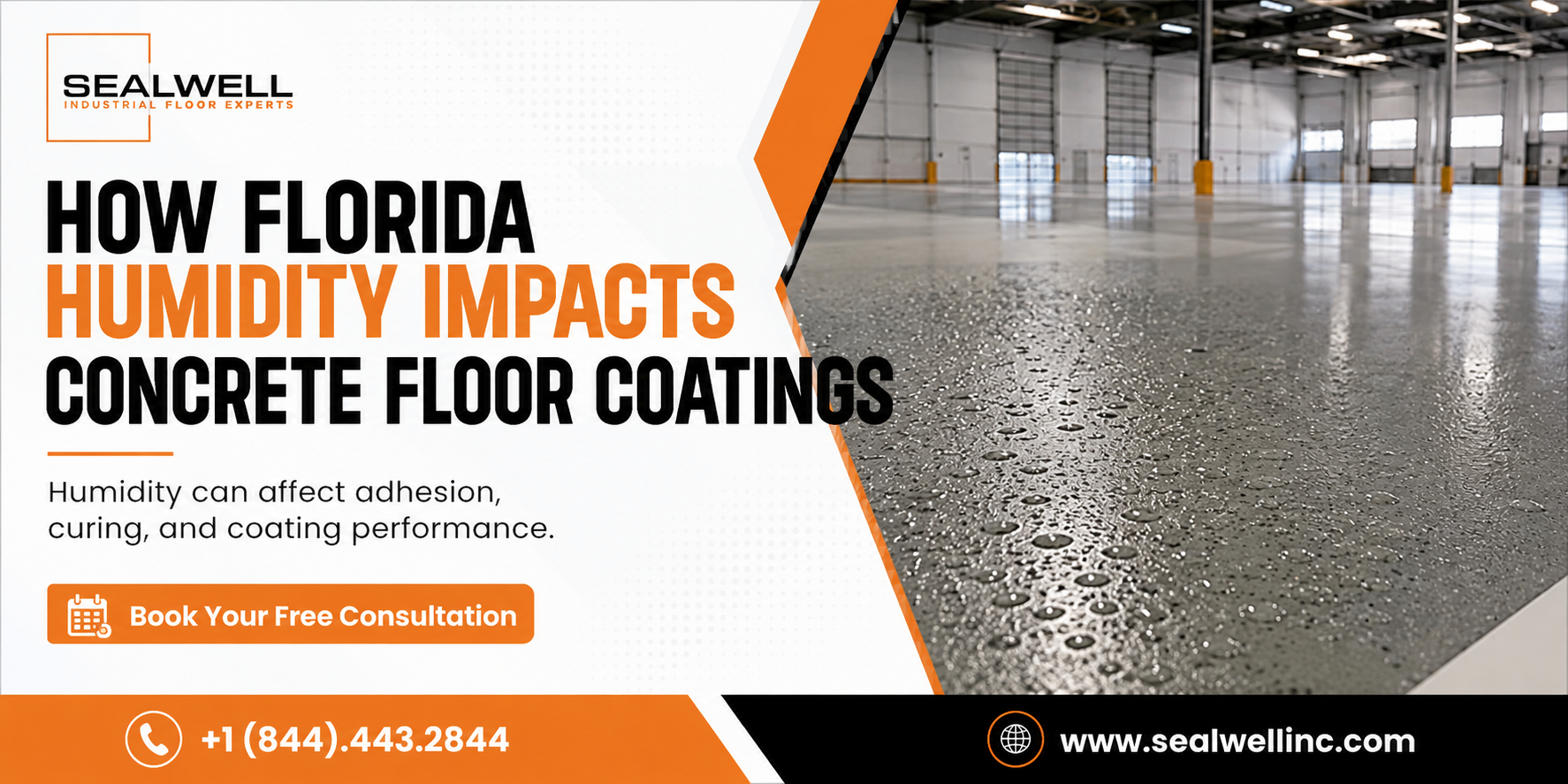
Florida businesses depend on durable floors to support daily operations, customer traffic, equipment movement, cleaning routines, and long-term facility performance. From warehouses and retail spaces to healthcare facilities, food production areas, automotive shops, and manufacturing plants, concrete floors need to perform in demanding conditions. That is why many businesses compare epoxy coatings, urethane systems, industrial floor coatings, and Concrete Polishing in Florida before choosing the right solution.
One major factor that affects commercial flooring decisions in Florida is humidity.
Florida’s warm, humid climate can influence how concrete floors behave before, during, and after installation. Even when a concrete slab looks dry on the surface, moisture may still be present inside the slab or moving upward from below. If this moisture is not properly evaluated, it can affect coating adhesion, curing, finish quality, maintenance, and long-term durability.
For facility owners and property managers, understanding the relationship between humidity and concrete floor coatings can help prevent costly floor failures and improve project planning.
Why Florida Humidity Matters for Concrete Floors
Concrete is porous. It can absorb, hold, and release moisture depending on environmental conditions. In humid climates like Florida, moisture can come from several sources, including the air, groundwater, rain, washdowns, condensation, plumbing, and the slab itself.
Commercial buildings in Florida often face:
- High outdoor humidity
- Frequent rain and storm seasons
- Ground-level concrete slabs
- Moisture vapor transmission
- Air-conditioned interiors meeting humid exterior air
- Condensation on cool surfaces
- Washdown or cleaning areas
- Poor drainage around buildings
- Older slabs without vapor barriers
These conditions can make commercial flooring more complex. A flooring system that works well in a dry climate may require additional evaluation, preparation, or moisture-control steps in Florida.
How Humidity Affects Epoxy Floor Coatings
Epoxy flooring is a popular option for commercial and industrial facilities because it creates a durable, seamless, and protective surface over concrete. However, epoxy depends on strong adhesion to the concrete slab.
If moisture vapor is moving through the slab, the pressure can push against the coating from below. Over time, this may cause problems such as:
- Peeling
- Bubbling
- Blistering
- Delamination
- Cloudy finish areas
- Poor bonding
- Premature coating failure
Humidity can also affect cure times. In some environments, coatings may take longer to cure or may require more careful installation planning. This is especially important for businesses with strict downtime limits.
Before applying epoxy in Florida, moisture testing and proper surface preparation are important steps. These help determine whether the slab is suitable for coating or whether a moisture mitigation system is needed.
How Humidity Affects Urethane and Industrial Coatings
Urethane and other industrial floor coatings are often used in commercial kitchens, food production facilities, manufacturing plants, and high-performance environments. These systems can provide strong resistance to chemicals, abrasion, moisture exposure, and cleaning routines when properly selected.
However, humidity and slab moisture still matter. The floor must be evaluated before installation so the coating system can bond correctly and perform as expected.
In food and beverage facilities, for example, floors may face both environmental humidity and operational moisture from spills, washdowns, steam, or sanitation processes. In those spaces, the right system may need slip resistance, cove base details, chemical resistance, and moisture-tolerant performance.
Sealwell helps businesses evaluate these conditions before recommending a floor coating system.
How Humidity Affects Polished Concrete
Polished concrete is different from epoxy because it is not a traditional coating. Instead, the existing concrete slab is mechanically ground, refined, hardened, and polished to create a smooth, durable surface.
Because polished concrete does not rely on a thick coating layer in the same way epoxy does, it may be a good option for certain facilities where moisture-related coating concerns exist. This is one reason businesses often consider Concrete Polishing in Florida for warehouses, retail spaces, showrooms, and commercial buildings.
However, polished concrete is not automatically the right answer for every humid environment. Moisture can still affect the slab, surface appearance, stain resistance, and maintenance needs. If the slab has moisture issues, contaminants, cracks, soft concrete, or previous coating damage, those conditions should be evaluated before polishing.
Polished concrete can be a strong option when the facility needs:
- A clean, professional appearance
- Reduced concrete dusting
- Improved light reflectivity
- Lower routine maintenance
- A durable surface for dry commercial use
- A floor that uses the existing concrete slab
For spaces exposed to chemicals, grease, heavy spills, or strict hygiene requirements, a protective coating system may still be more appropriate.
Moisture Vapor Transmission: The Hidden Risk
One of the biggest risks in humid climates is moisture vapor transmission. This occurs when moisture moves through the concrete slab as vapor. The surface may look dry, but vapor may still be rising from below.
When a floor coating is applied over a slab with excessive vapor movement, the moisture can become trapped beneath the coating. This can create pressure that eventually causes coating failure.
Common warning signs of moisture vapor problems include:
- Dark spots on concrete
- Damp areas
- Peeling paint or old coatings
- Bubbling floor coatings
- Musty odors
- Efflorescence or white powdery residue
- Loose tile or adhesive residue
- Previous floor covering failure
For commercial buildings in Florida, these warning signs should be taken seriously before installing a new floor coating.
Why Moisture Testing Is Important Before Floor Coating
Moisture testing helps determine whether the concrete slab is ready for a floor coating. It also helps the flooring team select the right primer, coating system, or moisture mitigation approach.
Testing may be recommended before:
- Epoxy flooring installation
- Urethane flooring installation
- Industrial floor coating application
- Polished concrete projects
- Removing and replacing failed coatings
- Coating older concrete slabs
- Installing floors in ground-level buildings
Moisture testing can help prevent expensive problems by identifying risks before installation begins.
For businesses, this means fewer surprises, better planning, and a stronger chance of long-term flooring success.
Surface Preparation Is Just as Important
Humidity is one part of the flooring equation. Surface preparation is another.
Even the best coating system can fail if the concrete is not properly prepared. Before installation, the surface may need to be cleaned, ground, shot blasted, repaired, or treated depending on its condition.
Proper preparation may include:
- Removing old coatings
- Cleaning oil, grease, or contaminants
- Repairing cracks and joints
- Grinding or profiling the concrete
- Addressing soft or weak concrete
- Applying primer or moisture-control products
- Checking for drainage concerns
- Inspecting the slab before installation
In Florida, surface preparation and moisture evaluation work together. Both steps help support better adhesion, better appearance, and longer floor life.
Which Flooring Option Is Best for Humid Florida Facilities?
The best flooring option depends on the facility. There is no single system that works for every commercial building.
Epoxy Flooring
Best for facilities that need a seamless protective surface, chemical resistance, custom colors, safety markings, or easy cleaning.
Urethane Flooring
Best for food production, commercial kitchens, washdown areas, thermal shock conditions, and demanding industrial spaces.
Polished Concrete
Best for dry warehouses, retail spaces, showrooms, and commercial buildings that want a low-maintenance, clean, reflective concrete surface.
Moisture Mitigation Systems
Best when moisture vapor levels are too high for a standard coating system but the facility still needs epoxy or another resinous floor.
A professional evaluation helps determine which system is most suitable for your building, climate conditions, and business operations.
Industries Most Affected by Humidity and Floor Coating Issues
Humidity-related flooring issues can affect many industries in Florida, including:
- Warehouses
- Distribution centers
- Food and beverage facilities
- Commercial kitchens
- Healthcare facilities
- Retail stores
- Automotive shops
- Manufacturing plants
- Cold storage areas
- Schools and institutions
- Laboratories
- Commercial office buildings
Each facility has different requirements. A warehouse may need forklift durability. A food production facility may need hygiene and chemical resistance. A retail store may need appearance and easy cleaning. A healthcare space may need sanitation and low-maintenance performance.
Sealwell helps match the floor system to the actual use of the facility.
How Sealwell Helps Florida Businesses Avoid Flooring Problems
Sealwell understands that commercial flooring in Florida requires careful planning. The climate, slab condition, moisture levels, surface preparation, and business operations all influence the best flooring choice.
Our team can help with:
- Concrete floor evaluation
- Moisture testing guidance
- Surface preparation planning
- Epoxy and urethane floor coating recommendations
- Polished concrete options
- Moisture mitigation planning
- Downtime and scheduling considerations
- Long-term maintenance guidance
Whether you are considering epoxy, urethane, polished concrete, or Concrete Polishing in Florida, Sealwell can help you choose a flooring solution based on performance, environment, budget, and facility needs.
Plan Your Florida Floor Coating Project with Confidence
Humidity can have a major impact on commercial concrete floor coatings in Florida. It can affect adhesion, curing, appearance, maintenance, and long-term performance. The good news is that many moisture-related problems can be reduced with proper testing, preparation, and system selection.
Before choosing a floor coating, your concrete slab should be evaluated by professionals who understand Florida’s climate and commercial flooring requirements.
Connect with the Sealwell team for a free consultation, site visit, and floor plan. Sealwell will review your floor condition, discuss your operational needs, and recommend the right solution, including epoxy systems, urethane coatings, moisture mitigation, or Concrete Polishing in Florida.
SEALWELL INC
Phone No– +1 (844)-443-2844
Email- in*******@se*********.com
Let’s Connect: www.sealwellinc.com
Our trusted clients: