
Blog and News
What Is the Commercial Epoxy Floor Cost per Square Foot in Florida?
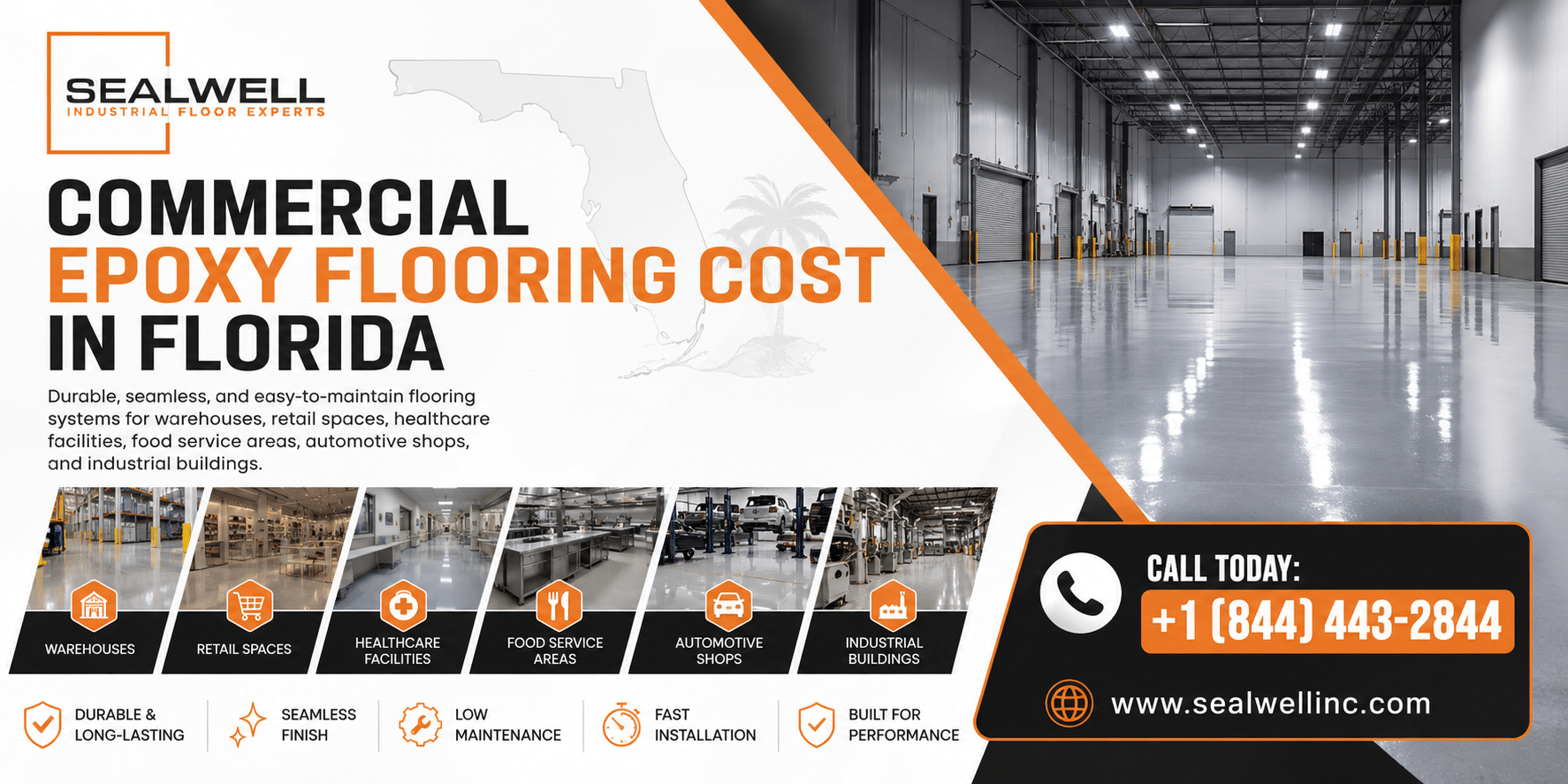
If you own or manage a warehouse, retail store, manufacturing facility, commercial kitchen, healthcare space, or automotive shop, one of the first questions you may ask is: “What is the commercial epoxy floor cost per square foot in Florida?”
The answer depends on several important factors, including the size of the space, the condition of the concrete, the type of epoxy system, the level of traffic, moisture conditions, safety needs, and how much downtime your business can allow.
For many businesses, epoxy flooring is a smart investment because it protects concrete, improves appearance, supports daily operations, and creates a durable surface that is easier to clean and maintain. When planned correctly, Commercial Flooring in Florida can help reduce long-term repair costs while improving safety, cleanliness, and performance.
At Sealwell, we help Florida businesses choose practical flooring systems based on their building, industry, schedule, and budget.
Average Commercial Epoxy Floor Cost per Square Foot in Florida
Commercial epoxy flooring is usually priced by the square foot. However, there is no one-size-fits-all price because every building and concrete slab is different.
A basic epoxy coating for a light commercial space may cost less than a heavy-duty industrial floor system designed for forklifts, chemicals, moisture, food production, or vehicle traffic. Decorative epoxy flooring for a retail showroom may also be priced differently than a slip-resistant floor for a commercial kitchen or manufacturing plant.
The final cost may include:
- Concrete inspection
- Surface preparation
- Crack and joint repair
- Moisture testing
- Primer application
- Epoxy coating layers
- Decorative flakes or quartz, if selected
- Slip-resistant texture
- Urethane or polyaspartic topcoat
- Labor and equipment
- Cure time and return-to-service planning
For this reason, the best way to understand your true epoxy floor cost per square foot is to schedule a professional site visit. Sealwell can inspect your concrete, review your usage needs, and recommend the right flooring system for your facility.
Why Does Commercial Epoxy Flooring Cost Vary?
The cost of commercial epoxy flooring in Florida can vary because the flooring system must match the way the space is used. A warehouse, restaurant kitchen, medical facility, and auto service shop all have different flooring requirements.
Below are the main cost factors business owners should consider.
1.Size of the Flooring Area
Square footage is one of the most important pricing factors. Larger projects may have a lower cost per square foot because equipment, materials, and labor can be planned more efficiently.
However, size is not the only factor. A large warehouse with clean, level concrete may be more cost-effective to coat than a smaller space with damaged concrete, old adhesives, moisture issues, or failed coatings.
2. Condition of the Existing Concrete
The condition of the existing slab has a major impact on cost. Epoxy coatings need a clean, strong, and properly prepared surface to bond correctly.
Costs may increase if the concrete has:
- Cracks
- Spalling
- Uneven areas
- Oil or grease stains
- Moisture vapor problems
- Old coatings
- Tile adhesive
- Weak or dusty concrete
- Damaged control joints
If surface problems are ignored, the coating may peel, bubble, crack, or fail early. Proper preparation is especially important for Commercial Flooring in Florida because humidity and slab moisture can affect long-term coating performance.
3. Surface Preparation Requirements
Professional epoxy flooring usually requires mechanical surface preparation. Depending on the floor, this may include diamond grinding, shot blasting, patching, cleaning, or coating removal.
Surface preparation helps the epoxy bond properly to the concrete. While this step adds to the project cost, it is one of the most important parts of a successful installation.
A lower-cost quote that skips proper preparation may lead to higher repair costs later.
4. Moisture Testing and Florida Humidity
Florida’s warm, humid climate can affect concrete floors. Moisture vapor can move through the slab and interfere with coating adhesion.
Before applying epoxy, moisture testing may be needed to determine whether the concrete is ready for coating. If moisture levels are too high, Sealwell may recommend a moisture mitigation system, special primer, or alternative floor coating solution.
Moisture testing is an important part of planning Commercial Flooring in Florida, especially for ground-level slabs, older buildings, warehouses, kitchens, and facilities exposed to frequent humidity or water.
5. Type of Epoxy Flooring System
Not all epoxy systems are the same. The system you choose will affect the cost, appearance, durability, and maintenance needs of the floor.
Common commercial epoxy flooring options include:
- Standard epoxy coating
- High-build epoxy system
- Decorative flake epoxy
- Quartz epoxy flooring
- Epoxy mortar flooring
- Chemical-resistant epoxy
- Slip-resistant epoxy
- Epoxy with urethane topcoat
- Fast-cure floor coating systems
A light commercial office or storage area may not need the same system as a food production facility, warehouse, or automotive shop. Sealwell helps businesses choose a floor system based on real operating conditions.
6. Traffic, Equipment, and Daily Use
The more stress your floor handles, the stronger the system needs to be. A space with light foot traffic usually costs less to coat than a facility with forklifts, pallet jacks, carts, production equipment, vehicles, or chemical exposure.
Heavy-use areas may require:
- Thicker epoxy layers
- Stronger primers
- Abrasion-resistant topcoats
- Impact-resistant systems
- Safety markings
- Slip-resistant texture
- Joint repair and reinforcement
Choosing the right system upfront can help extend floor life and reduce maintenance costs over time.
7. Safety and Slip Resistance
Many Florida businesses need slip-resistant flooring, especially in areas exposed to water, grease, oil, cleaning chemicals, or heavy foot traffic.
Slip-resistant finishes are commonly used in:
- Warehouses
- Commercial kitchens
- Food and beverage facilities
- Healthcare buildings
- Automotive shops
- Restrooms
- Loading docks
- Manufacturing areas
Adding texture or traction can affect the total cost, but it may also improve workplace safety and reduce the risk of slips and falls.
8. Downtime and Installation Timeline
Downtime is one of the biggest concerns for business owners. Some companies can close an area for several days, while others need phased installation, weekend scheduling, night work, or faster-curing products.
The installation timeline depends on:
- Project size
- Concrete repairs
- Surface preparation
- Number of coating layers
- Humidity and temperature
- Cure time
- Return-to-service requirements
Sealwell can help plan the project around your business operations to reduce disruption whenever possible.
Commercial Epoxy Flooring Cost by Industry
Different industries require different levels of floor protection. Below are common examples of how flooring needs can vary.
Warehouse Flooring
Warehouses need durable floors that can handle forklifts, pallet jacks, racking systems, and high foot traffic. Epoxy flooring can improve concrete protection, light reflectivity, cleanability, and overall floor performance.
Warehouse projects may also include line striping, safety zones, loading dock coatings, and abrasion-resistant topcoats.
Retail Flooring
Retail stores need floors that look professional and are easy to maintain. Decorative epoxy flooring can create a clean, polished appearance while standing up to daily customer traffic.
Retail flooring may focus on appearance, stain resistance, easy cleaning, and long-term durability.
Healthcare Flooring
Healthcare facilities need clean, seamless, and low-maintenance flooring systems. Epoxy floor coatings can support sanitation routines by reducing porous surfaces and hard-to-clean joints.
Medical offices, clinics, laboratories, and healthcare support areas may also need low-odor products and careful scheduling to limit disruption.
Food and Beverage Flooring
Food and beverage facilities need floors that can handle spills, cleaning chemicals, water, grease, and frequent washdowns. In some environments, urethane cement may be recommended instead of standard epoxy because it can perform better under thermal shock, hot water, and heavy washdown conditions.
Sealwell can help evaluate whether epoxy, urethane cement, or another system is best for your food service or production space.
Automotive Shop Flooring
Automotive shops, dealerships, and service bays need flooring that resists oil, grease, tire marks, chemicals, tools, and vehicle traffic.
A properly selected epoxy system can improve appearance, simplify cleaning, and protect the concrete from daily wear.
Manufacturing Flooring
Manufacturing facilities may need industrial floor coatings that resist chemicals, abrasion, impact, and equipment traffic. These floors may also require safety markings, texture, and coatings designed for specific production conditions.
The cost depends on the type of manufacturing, traffic level, chemical exposure, and downtime limitations.
Is Commercial Epoxy Flooring Worth the Cost?
For many businesses, epoxy flooring is worth the investment because it offers durability, protection, and easier maintenance compared to untreated concrete.
Key benefits include:
- Seamless surface
- Improved appearance
- Easier cleaning
- Concrete protection
- Stain resistance
- Chemical resistance options
- Slip-resistant finishes
- Custom colors and safety markings
- Better light reflectivity
- Long-term value
The cheapest floor coating is not always the best choice. A properly installed system may cost more upfront but can save money by reducing repairs, early replacement, safety concerns, and operational downtime.
How to Get an Accurate Epoxy Flooring Estimate
To get an accurate estimate, a contractor needs to understand your floor, your building, and your business operations.
Before requesting a quote, prepare the following details:
- Approximate square footage
- Facility type
- Current concrete condition
- Photos of the floor
- Existing coating or bare concrete
- Traffic type
- Chemical exposure
- Cleaning methods
- Moisture concerns
- Desired finish
- Slip-resistance needs
- Downtime limitations
- Preferred installation schedule
Sealwell can review these details during a consultation and site visit to create a practical floor plan for your space.
Why Choose Sealwell for Commercial Flooring in Florida?
Sealwell understands that every commercial facility has different flooring needs. A warehouse floor must perform differently than a restaurant kitchen floor. A healthcare floor has different requirements than an automotive service bay.
Our team helps Florida businesses evaluate the right flooring system based on:
- Surface condition
- Moisture concerns
- Industry requirements
- Traffic level
- Safety needs
- Cleaning process
- Budget
- Installation timeline
- Long-term maintenance goals
From consultation to floor planning, Sealwell focuses on helping businesses choose flooring that is durable, functional, and designed for real-world use.
Get a Free Commercial Flooring Consultation
If you are comparing commercial epoxy floor cost per square foot in Florida, the next step is a professional evaluation. Online price ranges can be helpful, but your actual cost depends on your concrete, building use, floor system, and downtime needs.
Connect with the Sealwell team for a free consultation, site visit, and floor plan.
Sealwell will review your space, discuss your goals, and help you choose the right solution for Commercial Flooring in Florida.
FAQ: Commercial Epoxy Floor Cost in Florida
How much does commercial epoxy flooring cost per square foot in Florida?
Commercial epoxy flooring cost in Florida depends on square footage, concrete condition, preparation needs, coating type, traffic level, and downtime requirements. A basic coating usually costs less than a heavy-duty industrial epoxy system.
What is included in commercial epoxy floor pricing?
Commercial epoxy floor pricing may include concrete inspection, surface preparation, crack repair, moisture testing, primer, epoxy layers, topcoat, slip-resistant texture, labor, equipment, and cure time.
Why does epoxy flooring cost more for industrial facilities?
Industrial facilities often need stronger coatings, thicker systems, chemical resistance, impact resistance, abrasion protection, and safety markings. These added requirements can increase the total project cost.
Is epoxy flooring good for commercial buildings in Florida?
Yes. Epoxy flooring can be a strong option for many Florida commercial buildings because it is durable, seamless, easy to clean, and available in slip-resistant and chemical-resistant systems.
Does Florida humidity affect epoxy flooring?
Yes. Florida humidity and concrete slab moisture can affect epoxy adhesion and curing. Moisture testing helps identify potential problems before the coating is installed.
Can epoxy flooring be installed over old concrete?
Yes, epoxy can often be installed over old concrete if the slab is properly prepared. Cracks, stains, old coatings, weak concrete, and moisture issues should be addressed before installation.
How long does commercial epoxy flooring installation take?
Installation time depends on the project size, surface preparation, repair needs, coating system, and cure time. Some small spaces may take a few days, while larger facilities may require phased scheduling.
Can Sealwell install flooring without shutting down my business?
In some cases, Sealwell may be able to plan phased installation, weekend scheduling, or after-hours work to help reduce downtime. The best approach depends on the facility layout and flooring system.
What industries use commercial epoxy flooring?
Commercial epoxy flooring is commonly used in warehouses, retail stores, healthcare facilities, food and beverage spaces, automotive shops, manufacturing plants, offices, schools, and industrial buildings.
Is epoxy flooring easy to maintain?
Yes. Epoxy flooring is generally easy to maintain with regular sweeping, mopping, and proper cleaning methods. A well-installed floor can help reduce dust, stains, and concrete wear.
How do I get an epoxy flooring quote in Florida?
To get an accurate quote, contact Sealwell for a free consultation, site visit, and floor plan. The team will inspect your space, review your needs, and recommend the right commercial flooring solution.
SEALWELL INC
Phone No– +1 (844)-443-2844
Email- in*******@se*********.com
Let’s Connect: www.sealwellinc.com
Our trusted clients: