
Blog and News
Is Polished Concrete Cheaper Than Epoxy Flooring?
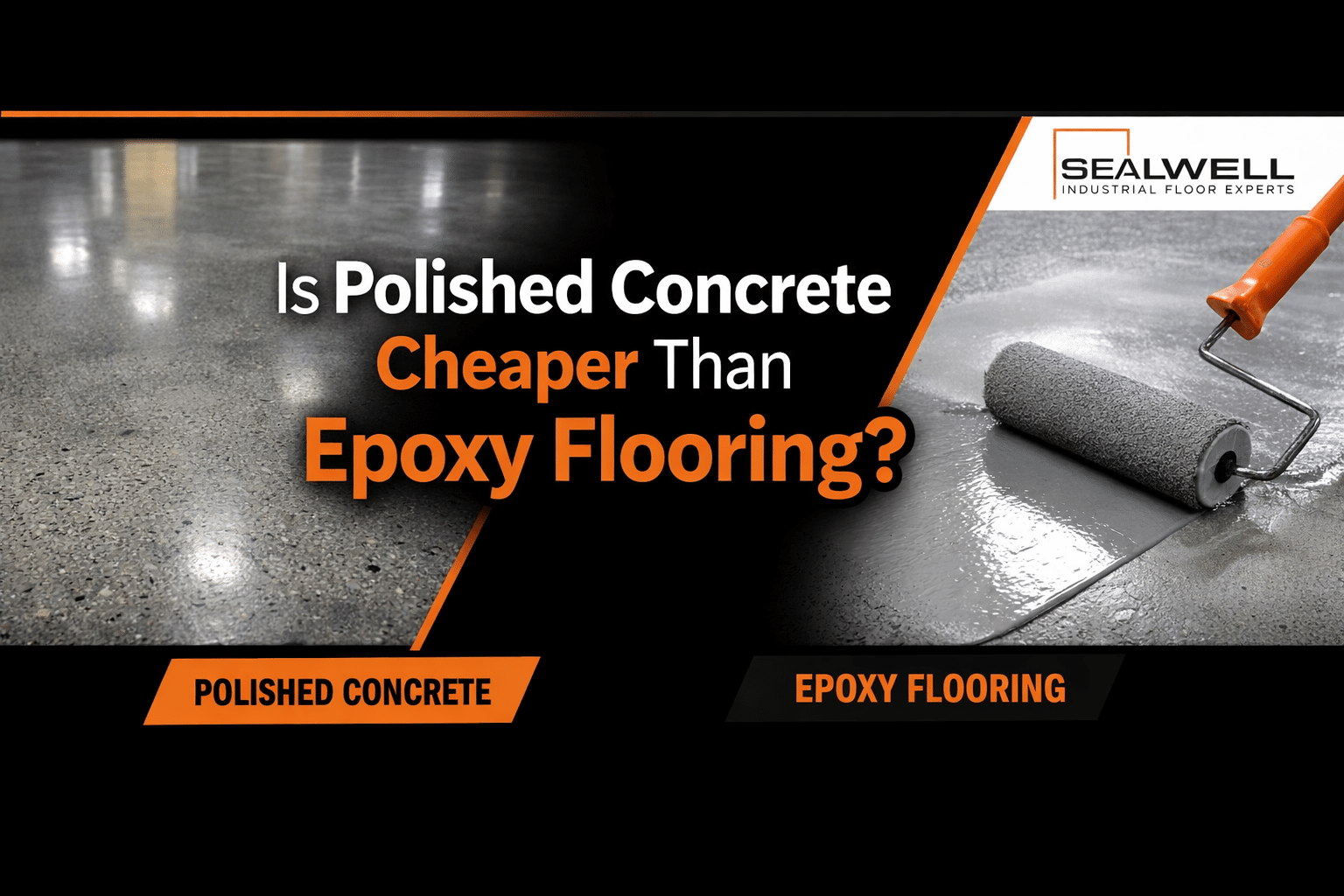
When businesses evaluate flooring options for commercial and industrial facilities, one of the most common questions is: Is polished concrete cheaper than epoxy flooring? The answer depends on several factors, including installation costs, long-term maintenance, durability, and the specific needs of the facility.
Both polished concrete and epoxy flooring are widely used in warehouses, manufacturing plants, retail spaces, and healthcare environments. Each offers unique advantages, but understanding their cost differences can help facility owners make a smarter investment.
Quick Answer: Which Is Cheaper?
- Polished concrete is often cheaper upfront if the existing slab is in good condition.
- Epoxy flooring may cost more initially but provides additional protection and customization.
- Long-term costs vary depending on maintenance, usage, and environmental conditions.
To determine the best option, it’s important to look beyond installation cost and evaluate total lifecycle value.
Understanding Polished Concrete Costs
Polished concrete uses the existing concrete slab, which helps reduce material costs. The process involves grinding, densifying, and polishing the surface to achieve a durable and reflective finish.
Cost Factors for Polished Concrete
- Condition of the existing concrete
- Level of grinding and polishing required
- Desired finish (matte to high-gloss)
- Surface repairs and preparation
- Project size and accessibility
Advantages of Polished Concrete
- Lower upfront cost in many cases
- Minimal maintenance requirements
- Long lifespan (often decades)
- Improved light reflectivity
- Environmentally friendly (uses existing slab)
Limitations
- Limited chemical resistance
- May not be suitable for areas with heavy spills
- Less customization compared to epoxy
Understanding Epoxy Flooring Costs
Epoxy flooring involves applying a resin-based coating over concrete to create a seamless, protective surface. It is widely used in industrial environments that require durability and resistance.
Cost Factors for Epoxy Flooring
- Type of epoxy system (standard, self-leveling, flake, or quartz)
- Number of coating layers
- Surface preparation requirements
- Chemical and slip resistance features
- Customization (colors, striping, logos)
Advantages of Epoxy Flooring
- Strong chemical and stain resistance
- Seamless and hygienic surface
- Customizable finishes
- Enhanced safety with slip-resistant options
- Ideal for heavy industrial use
Limitations
- Higher initial cost compared to polished concrete
- Requires periodic maintenance or recoating
- Longer installation time in some cases
Installation Cost Comparison
| Factor | Polished Concrete | Epoxy Flooring |
| Initial Cost | Lower (if slab is good) | Moderate to high |
| Surface Prep | Moderate | High |
| Material Cost | Lower | Higher |
| Installation Time | Faster | Slightly longer |
Polished concrete is typically more affordable when minimal repairs are needed. However, epoxy systems provide additional protection that may justify the higher initial investment.
Maintenance and Long-Term Cost Comparison
Polished Concrete
- Minimal maintenance
- No coatings to reapply
- Long lifespan
- Lower ongoing costs
Epoxy Flooring
- May require periodic recoating
- Easy to clean but requires maintenance
- Higher long-term upkeep depending on usage
In many cases, polished concrete offers lower lifecycle costs, while epoxy provides better protection in harsh environments.
Which Flooring Is Better for Your Facility?
Choose Polished Concrete If:
- You want a cost-effective solution
- Your facility has minimal chemical exposure
- You prefer low maintenance
- You want improved lighting efficiency
Choose Epoxy Flooring If:
- Your facility handles chemicals or liquids
- You need a seamless, hygienic surface
- You require safety features like slip resistance
- You want customized design options
Industry-Based Recommendations
Different industries benefit from different flooring systems:
- Warehouses & Distribution Centers: Polished concrete for cost efficiency
- Manufacturing Plants: Epoxy for durability and protection
- Healthcare & Pharmaceutical Facilities: Epoxy or urethane for hygiene compliance
- Retail Spaces: Polished concrete for aesthetics and cost
- Food Processing Facilities: Epoxy or urethane for sanitation and chemical resistance
Why the Cheapest Option Isn’t Always the Best
While polished concrete may be cheaper upfront, the best flooring choice depends on your operational needs. Choosing the wrong flooring can lead to:
- Increased maintenance costs
- Safety risks
- Frequent repairs
- Operational downtime
Investing in the right flooring system ensures long-term efficiency and cost savings.
How Sealwell Helps You Choose the Right Flooring
Sealwell specializes in helping businesses select the best flooring system based on their operational needs, environment, and budget.
Our approach includes:
- Detailed site evaluation
- Customized flooring recommendations
- Professional installation
- Long-term performance solutions
- Minimal downtime during installation
We help businesses balance cost, durability, and performance for the best return on investment.
Final Verdict: Polished Concrete vs Epoxy Flooring
So, is polished concrete cheaper than epoxy flooring?
Yes in many cases, polished concrete has a lower upfront cost, especially when the existing slab is in good condition.
However, epoxy flooring offers better protection, customization, and performance in demanding environments.
The best choice depends on your facility’s needs, not just the initial price.
Get Expert Guidance for Your Flooring Project
Choosing the right flooring system is a critical decision for your facility. Whether you need cost-effective polished concrete or high-performance epoxy flooring, Sealwell is here to help you make the right choice.
Connect with Sealwell to discover how our experts evaluate your facility, recommend the most suitable flooring solution, and deliver durable, high-performance installations with minimal downtime. Our team is ready to guide you with tailored recommendations that align with your operational needs and long-term goals.
Frequently Asked Questions (FAQs)
Is polished concrete cheaper than epoxy flooring?
Polished concrete is generally cheaper upfront, but epoxy may provide better long-term value depending on the environment.
Which lasts longer: epoxy or polished concrete?
Both can last many years, but polished concrete often has a longer lifespan with less maintenance.
Is epoxy flooring better for industrial use?
Yes, epoxy flooring is better for environments with chemicals, heavy machinery, and high durability requirements.
Does polished concrete require maintenance?
Polished concrete requires minimal maintenance compared to most flooring systems.
Which flooring is best for healthcare facilities?
Epoxy or urethane flooring is typically preferred due to hygiene, seamless surfaces, and compliance requirements.
SEALWELL INC
Phone No– +1 (844)-443-2844
Email- in*******@se*********.com
Let’s Connect: www.sealwellinc.com
Our trusted clients: