
Blog and News
Why Is Moisture Testing Important Before Applying Epoxy in Florida?
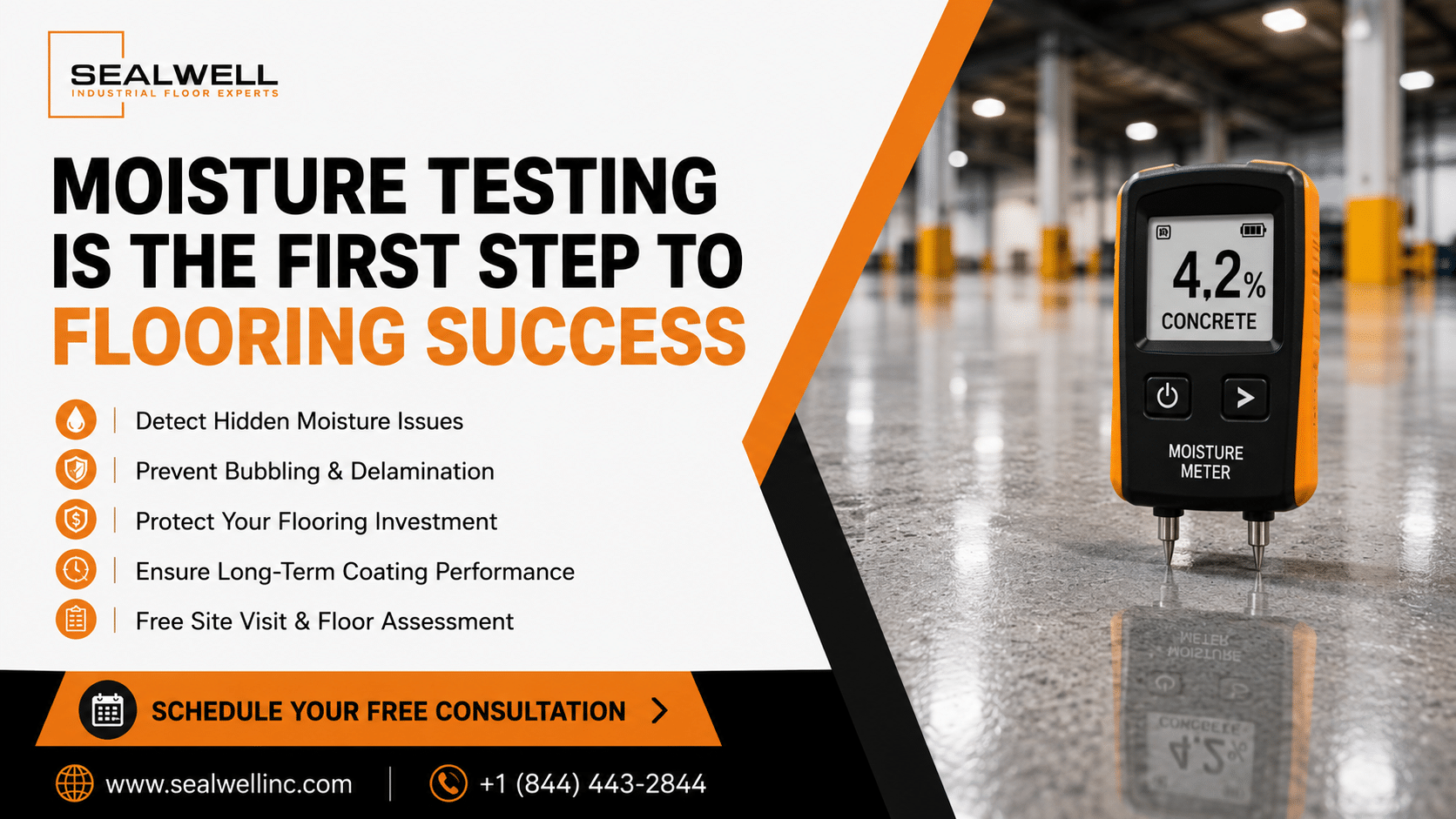
Epoxy floors are known for their durability, seamless appearance, easy maintenance, and long-term performance. From garages and warehouses to retail spaces, restaurants, showrooms, medical facilities, and industrial properties, epoxy is one of the most reliable flooring options available today. But in Florida, one critical step must happen before any epoxy coating is applied: moisture testing.
Moisture testing helps determine whether a concrete slab is ready to receive epoxy. Without it, even the best epoxy system can fail. Florida’s warm climate, high humidity, frequent rain, coastal conditions, and moisture-prone concrete slabs make testing especially important. If moisture is trapped below the surface or moving through the concrete, it can lead to bubbling, peeling, soft spots, discoloration, poor adhesion, and complete coating failure.
For property owners considering Epoxy Flooring in Florida, moisture testing is not just a technical step. It is a protection step. It helps ensure that the floor system is installed correctly, performs as expected, and lasts longer.
What Is Moisture Testing for Epoxy Flooring?
Moisture testing is the process of checking how much moisture is present in or moving through a concrete slab before a flooring system is installed. Concrete may look dry on the surface, but moisture can still exist deep inside the slab. This hidden moisture can rise through the concrete over time and interfere with epoxy adhesion.
Professional moisture testing helps answer important questions:
- Is the concrete slab dry enough for epoxy?
- Is moisture vapor moving through the slab?
- Is there a risk of coating failure after installation?
- Does the floor need moisture mitigation before epoxy application?
- What epoxy system is best suited for the condition of the slab?
For Epoxy Flooring in Florida, these questions matter because many concrete slabs are exposed to moisture from below, especially in ground-level buildings, garages, warehouses, coastal properties, and older structures.
Why Florida Floors Are More Vulnerable to Moisture Issues
Florida’s environment creates unique flooring challenges. Unlike dry inland regions, Florida properties are often exposed to humidity, rain, groundwater movement, and salt-air conditions. Even when a building is fully enclosed, the concrete slab can still absorb or transmit moisture.
Several Florida-specific factors increase the need for moisture testing:
High Humidity
Florida’s air often carries a high level of moisture. This can slow the drying process of concrete and contribute to condensation or surface dampness in certain environments.
Frequent Rain and Storms
Heavy rain, tropical storms, and hurricanes can raise moisture levels around buildings. Water can move into or under slabs, especially if drainage is poor.
Ground-Level Concrete Slabs
Many Florida homes and commercial buildings are built on concrete slabs. These slabs can absorb moisture from the soil below if there is no effective vapor barrier.
Coastal Conditions
Properties near the coast may experience higher moisture exposure due to salt air, humidity, and changing weather conditions.
Older Buildings
Older concrete slabs may not have modern moisture barriers. Even if the surface appears solid, the slab may still allow vapor transmission from below.
Because of these conditions, moisture testing is one of the most important preparation steps before installing Epoxy Flooring in Florida.
What Happens If Epoxy Is Applied Without Moisture Testing?
Skipping moisture testing may save time at the beginning, but it can create expensive problems later. Epoxy bonds tightly to prepared concrete. However, if moisture vapor pushes upward through the slab, it can weaken that bond.
Common problems include:
Bubbling
Moisture vapor can create pressure under the epoxy coating. This may cause bubbles or blisters to appear on the surface.
Peeling
If the epoxy cannot properly bond to the concrete, sections of the floor may begin to peel away.
Delamination
Delamination occurs when the coating separates from the concrete slab. This is one of the most serious flooring failures and often requires removal and reinstallation.
Cloudy or Discolored Finish
Moisture can affect the appearance of epoxy, causing haziness, uneven color, or visible defects.
Soft or Weak Areas
Moisture can prevent epoxy from curing properly in some areas, leading to weak or tacky spots.
Costly Repairs
Once moisture-related failure occurs, fixing the problem usually requires more than a simple patch. The damaged coating may need to be ground off, the slab retested, and a new system installed.
For homeowners and businesses investing in Epoxy Flooring in Florida, proper testing can prevent avoidable downtime, repair costs, and frustration.
Concrete Can Look Dry and Still Have Moisture Problems
One of the biggest misconceptions about epoxy flooring is that a dry-looking slab is ready for coating. Unfortunately, surface appearance does not tell the full story.
Concrete is porous. It can hold moisture internally and allow vapor to pass through. A floor may feel dry to the touch while still having moisture deep within the slab. Once epoxy is applied, the coating can trap that vapor. Over time, vapor pressure may build underneath the epoxy and cause failure.
That is why professional contractors do not rely on appearance alone. Moisture testing gives measurable information that helps determine whether the floor is ready.
Types of Moisture Testing Before Epoxy Flooring
There are different ways to evaluate moisture in concrete. The right testing method may depend on the property, slab condition, flooring system, and manufacturer recommendations.
Relative Humidity Testing
Relative humidity testing measures moisture inside the concrete slab. This method helps identify moisture levels below the surface, not just on top of the slab. It is commonly used because moisture inside the slab can affect how the epoxy performs after installation.
Calcium Chloride Testing
Calcium chloride testing measures the moisture vapor emission rate from the concrete surface. This can help determine how much moisture is moving out of the slab over a set period.
Surface Moisture Meters
Surface meters can provide quick readings and help identify areas that may require further testing. However, surface meters alone may not provide enough information for a final installation decision.
Visual Inspection
A professional inspection can identify warning signs such as dark patches, damp areas, efflorescence, cracks, previous coating failure, or areas where water may be entering the space.
At Sealwell, the goal is not only to test the floor but to understand the full condition of the space. Proper planning helps recommend the right preparation, moisture-control solution, and epoxy system.
Moisture Testing Protects Your Epoxy Investment
Epoxy flooring is a valuable upgrade. It improves appearance, durability, safety, and cleanability. But the final result depends heavily on what happens before the coating is applied.
Moisture testing helps protect your investment by:
- Confirming whether the slab is suitable for epoxy
- Reducing the risk of coating failure
- Helping choose the right primer or moisture-control system
- Improving long-term adhesion
- Supporting better floor performance
- Reducing future repair costs
- Helping create a smoother installation plan
For commercial properties, this is especially important. A failed floor can interrupt operations, affect customer experience, create safety concerns, and lead to unplanned expenses.
Why Moisture Testing Matters for Commercial Epoxy Floors
Businesses in Florida often choose epoxy because it can handle traffic, equipment, spills, cleaning, and daily wear. But commercial spaces may also face greater moisture risks due to larger slab areas, frequent cleaning, HVAC changes, loading docks, open doors, and building age.
Moisture testing is especially important for:
- Warehouses
- Auto shops
- Retail stores
- Restaurants
- Medical offices
- Manufacturing facilities
- Aircraft hangars
- Showrooms
- Schools and public buildings
- Commercial kitchens
- Parking garages
- Storage facilities
In these environments, the cost of floor failure can be much higher than the cost of proper testing. That is why moisture testing should be included in any serious plan for Epoxy Flooring in Florida.
Why Moisture Testing Matters for Residential Garage Floors
Garage floors in Florida are also vulnerable to moisture issues. Moisture can enter through the slab, around garage doors, from poor drainage, or from humidity and condensation. Many garages also have older concrete that has absorbed oils, salts, or previous coatings.
Before installing epoxy in a garage, moisture testing helps determine whether the coating can properly bond to the concrete. It also helps identify whether extra surface preparation or moisture control is needed.
A properly tested and prepared garage floor can deliver a clean, durable, attractive finish that stands up to vehicles, foot traffic, tools, and everyday use.
What Happens After Moisture Testing?
Moisture testing does not automatically mean there is a problem. It simply provides information. Once test results are reviewed, the Sealwell team can recommend the next steps.
Possible outcomes may include:
- The slab is ready for epoxy installation
- Additional drying time is needed
- Surface preparation should be adjusted
- A moisture-mitigation primer may be recommended
- Cracks or joints should be repaired first
- A different coating system may be better suited
- Drainage or water intrusion should be addressed before installation
This planning stage is what separates a professional epoxy installation from a risky one. The goal is to build the right system for the actual condition of the floor.
Moisture Testing and Surface Preparation Work Together
Moisture testing is only one part of a successful epoxy flooring project. Surface preparation is equally important. Even a dry slab can fail if the surface is not properly prepared.
A professional epoxy installation may include:
- Cleaning the concrete
- Removing old coatings or sealers
- Grinding or profiling the surface
- Repairing cracks and joints
- Removing oil, grease, or contaminants
- Testing for moisture
- Applying the right primer
- Installing the selected epoxy system
When moisture testing and surface preparation are done correctly, the epoxy has a much better chance of bonding strongly and performing long term.
Why Choose Sealwell for Epoxy Flooring in Florida?
Sealwell understands the flooring challenges that Florida property owners face. From humidity and rain exposure to slab moisture and surface preparation, every detail matters before epoxy is applied.
Sealwell helps homeowners, businesses, and property managers make informed flooring decisions through professional inspection, planning, and installation support. Instead of rushing into coating application, the team evaluates the condition of the floor and recommends the best path forward.
When you work with Sealwell, you get a flooring partner focused on durability, appearance, safety, and long-term value.
Get a Free Consultation, Site Visit, and Floor Plan
Before investing in epoxy, make sure your concrete is ready. Moisture testing can help prevent costly failures and protect the quality of your flooring project.
If you are planning Epoxy Flooring in Florida, connect with the Sealwell team for a free consultation, professional site visit, and customized floor plan.
Call Sealwell today or request your free consultation to get started with a floor system built for Florida conditions.
FAQs About Moisture Testing Before Epoxy Flooring in Florida
Why is moisture testing important before epoxy flooring?
Moisture testing is important because hidden moisture in concrete can prevent epoxy from bonding properly. If moisture vapor moves through the slab after installation, it can cause bubbling, peeling, discoloration, or delamination.
Do I need moisture testing before applying epoxy in Florida?
Yes. Moisture testing is strongly recommended before applying epoxy in Florida because the state’s humidity, rain, groundwater, and slab-on-grade construction can increase the risk of moisture-related coating failure.
Can epoxy be installed over damp concrete?
Epoxy should not be installed over damp concrete unless the flooring system is specifically designed for that condition and proper moisture mitigation steps are taken. Applying standard epoxy over damp concrete can lead to poor adhesion and coating failure.
How do I know if my concrete has moisture before epoxy?
A concrete slab can be tested using relative humidity testing, calcium chloride testing, surface moisture meters, and professional inspection. A floor may look dry but still contain moisture inside the slab.
What happens if moisture is found before epoxy installation?
If moisture is found, the installer may recommend additional drying time, a moisture-mitigation primer, improved surface preparation, crack repairs, drainage correction, or a different coating system.
Is moisture testing required for garage epoxy floors?
Moisture testing is recommended for garage epoxy floors, especially in Florida. Garages can be affected by slab moisture, humidity, rainwater, poor drainage, and older concrete conditions.
How does Florida humidity affect epoxy flooring?
Florida humidity can slow concrete drying and increase moisture exposure. If moisture is trapped under epoxy or moves through the slab, it may cause bubbles, peeling, or adhesion problems.
What is the best way to prevent epoxy floor failure?
The best way to prevent epoxy floor failure is to start with proper inspection, moisture testing, surface preparation, crack repair, primer selection, and professional installation.
Can moisture damage a new epoxy floor?
Yes. Moisture vapor moving through concrete can damage a new epoxy floor by weakening the bond between the coating and the slab. This may result in blisters, peeling, or delamination.
Who should I contact for epoxy flooring in Florida?
For professional Epoxy Flooring in Florida, contact Sealwell for a free consultation, site visit, and customized floor plan. The Sealwell team can inspect your concrete, check moisture conditions, and recommend the right flooring solution.
SEALWELL INC
Phone No– +1 (844)-443-2844
Email- in*******@se*********.com
Let’s Connect: www.sealwellinc.com
Our trusted clients: