
Blog and News
Advantages and Disadvantages of MMA Flooring vs Epoxy Flooring
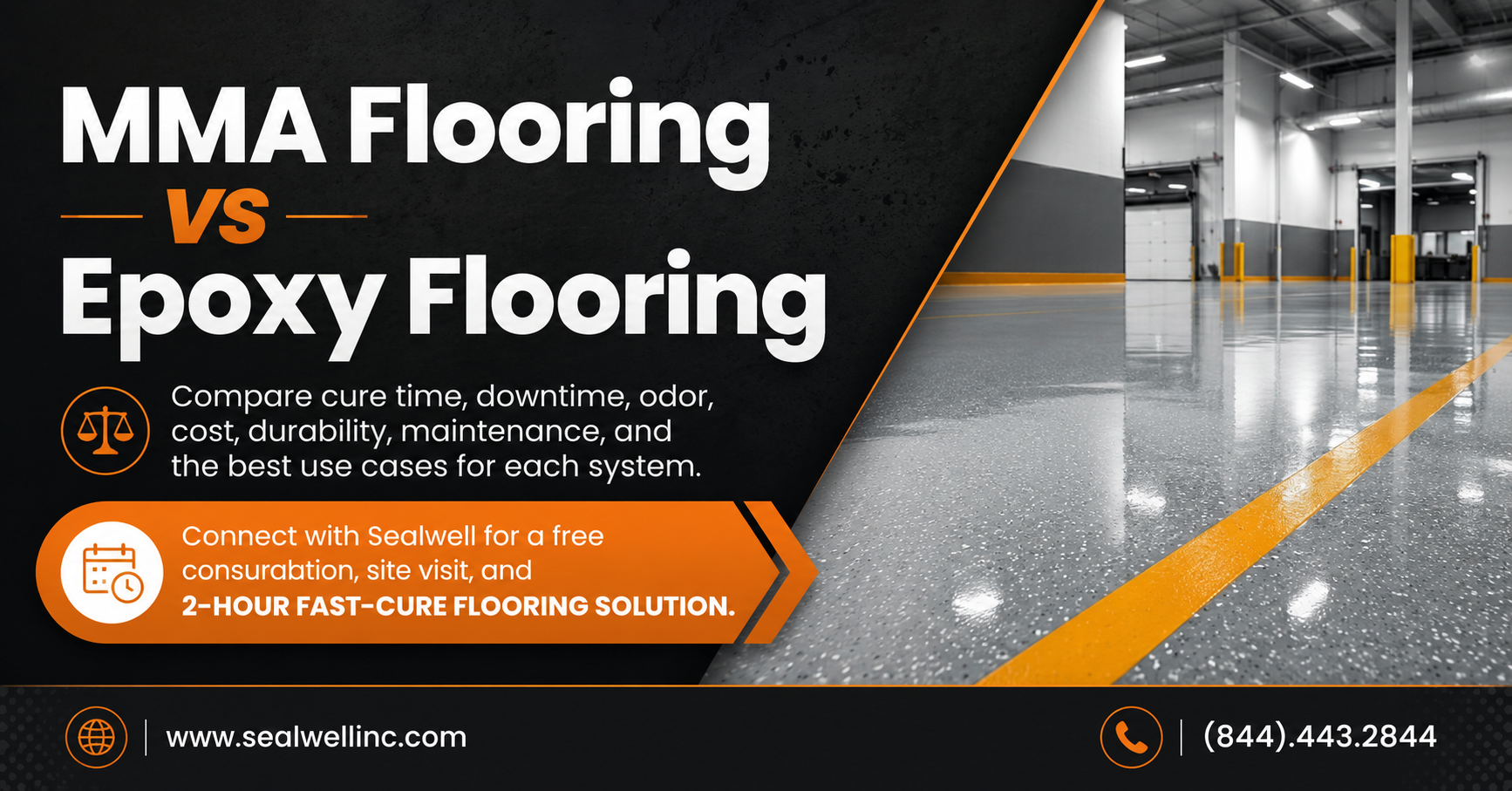
MMA Flooring Vs Epoxy Flooring is an important comparison for facility managers who need to choose the right resinous flooring system for commercial or industrial use. MMA flooring is best known for fast cure performance, low-temperature application, and rapid return to service, while epoxy flooring is widely used for durability, chemical resistance, concrete protection, and long-term value. The better option depends on downtime limits, temperature conditions, traffic, maintenance needs, budget, and facility use.
Both MMA and epoxy flooring can create seamless, durable surfaces for warehouses, food facilities, cold storage rooms, retail stores, healthcare spaces, laboratories, manufacturing plants, and commercial buildings. However, each system has different strengths and limitations. Understanding the advantages and disadvantages of both can help you make a practical flooring decision.
What Is MMA Flooring?
MMA stands for methyl methacrylate, a fast-curing resin flooring system used in commercial and industrial environments. It is often selected when a facility needs a strong, seamless floor but cannot afford long downtime.
One of the biggest advantages of MMA flooring is its rapid cure performance. In many cases, MMA systems are designed to return to service in a short timeframe, sometimes around 2 hours depending on the system, site conditions, and project requirements. This makes MMA flooring useful for active facilities, cold storage areas, supermarkets, food production spaces, retail environments, and facilities with limited shutdown windows.
MMA flooring can also be applied in low-temperature environments, which makes it suitable for freezers, coolers, and refrigerated spaces where many traditional flooring systems may be harder to install.
What Is Epoxy Flooring?
Epoxy flooring is a resinous flooring system made from epoxy resin and hardener. Once installed over properly prepared concrete, it creates a tough, protective surface that can resist wear, impact, stains, and many chemicals.
Epoxy flooring is commonly used in warehouses, manufacturing facilities, automotive shops, showrooms, commercial kitchens, healthcare spaces, and industrial buildings. It is valued for its durability, strong adhesion, customization options, and long-term concrete protection.
While epoxy flooring is highly versatile, it usually requires a longer cure time than MMA flooring. This means the area may need to remain closed for a longer period before it can handle traffic, equipment, cleaning, or full facility use.
Key Difference Between MMA Flooring and Epoxy Flooring
The biggest difference is cure time and return to service.
MMA flooring is designed for fast cure performance and low downtime. Epoxy flooring is known for durability and cost-effective long-term protection but usually requires more curing time.
In simple terms:
- Choose MMA flooring when speed, cold-temperature installation, and minimal downtime are top priorities.
- Choose epoxy flooring when durability, budget control, customization, and standard commercial or industrial performance are the main priorities.
Both systems can perform well when professionally installed, but they should be selected based on facility conditions.
Advantages of MMA Flooring
- Fast Cure Performance
The strongest advantage of MMA flooring is fast curing. MMA systems are often selected for projects where businesses need quick return to service. This can be valuable for facilities that operate long hours or cannot close for several days.
- Reduced Shutdown Time
MMA flooring can help reduce downtime during installation. Businesses may be able to complete work during overnight windows, weekends, or phased installation schedules. This supports business continuity and helps reduce operational disruption.
- Low-Temperature Application
MMA flooring can be installed in cold environments, making it a strong option for cold storage rooms, freezer areas, coolers, and refrigerated spaces. This is a major advantage over some traditional systems that may struggle in low-temperature conditions.
- Good for Phased Installation
Because MMA cures quickly, contractors can work in sections and reopen areas faster. This is useful for warehouses, supermarkets, food facilities, and active buildings where full shutdown is not practical.
- Seamless and Easy to Clean
MMA flooring creates a seamless surface that helps reduce cracks, joints, and porous areas where dirt, moisture, grease, or debris can collect. This supports easier cleaning and hygiene-focused environments.
Disadvantages of MMA Flooring
- Odor During Installation
MMA flooring may release a strong odor during installation and curing. The smell can be noticeable in occupied spaces, so ventilation, temporary extraction fans, and after-hours scheduling are important.
- Higher Upfront Cost
MMA flooring can cost more upfront than standard epoxy flooring. However, the higher initial investment may be offset by faster return to service and reduced downtime costs.
- Specialized Installation Required
MMA cures quickly, so it must be installed by trained professionals. Poor surface preparation, incorrect mixing, or inexperienced installation can lead to bonding or curing issues.
- Not Always Necessary for Every Facility
If a facility has enough downtime available and does not require low-temperature installation, epoxy flooring may be a more practical and cost-effective choice.
Advantages of Epoxy Flooring
- Strong Durability
Epoxy flooring is known for its strength and durability. It can handle foot traffic, forklifts, pallet jacks, carts, vehicle traffic, and daily commercial or industrial use when properly installed.
- Chemical and Stain Resistance
Epoxy systems can be designed to resist oils, solvents, cleaning chemicals, stains, and many industrial fluids. This makes epoxy useful for automotive shops, warehouses, manufacturing plants, and service areas.
- Cost-Effective Flooring Solution
Epoxy flooring is often more affordable than MMA flooring upfront. For many commercial and industrial facilities, it offers a strong balance of cost, durability, and performance.
- Custom Finish Options
Epoxy flooring can be customized with colors, flakes, quartz, safety markings, slip-resistant textures, gloss levels, and decorative finishes. This makes it suitable for both industrial and customer-facing spaces.
- Long-Term Concrete Protection
Epoxy flooring helps protect the concrete below from wear, stains, dusting, moisture exposure, and daily abuse. This can reduce maintenance needs and improve facility appearance.
Disadvantages of Epoxy Flooring
- Longer Cure Time
Epoxy generally requires more curing time than MMA. Depending on the system and site conditions, a facility may need to restrict traffic for longer before returning the space to full use.
- Temperature Sensitivity During Installation
Epoxy can be more sensitive to temperature and humidity during installation. Cold temperatures may slow curing, which can extend downtime and affect scheduling.
- Moisture Concerns
If the concrete slab has moisture vapor issues and they are not addressed before installation, epoxy coatings may bubble, peel, or delaminate. Moisture testing and proper preparation are important.
- May Need Recoating Over Time
Like any flooring system, epoxy can wear in high-traffic zones. Forklift lanes, loading docks, turning areas, and chemical exposure zones may require maintenance or recoating over time.
MMA Flooring vs Epoxy Flooring: Which Is Better for Fast Cure?
MMA flooring is usually the better choice when fast cure is the top priority. Its rapid curing ability makes it useful for facilities that need a quick return to service.
This includes:
- Cold storage rooms
- Freezers and coolers
- Supermarkets
- Food production areas
- Retail spaces
- Active warehouses
- Healthcare spaces
- Laboratories
- Facilities with short shutdown windows
Epoxy flooring can still be a strong choice, but it usually requires more time before full traffic and equipment use can resume.
Which Flooring System Is Better for Long-Term Performance?
Both systems can provide long-term performance when properly installed and maintained.
MMA flooring can perform well in fast-turnaround, cold-temperature, and active facility environments. Epoxy flooring can provide excellent long-term durability in warehouses, manufacturing plants, automotive spaces, and commercial buildings.
The best system depends on:
- Traffic level
- Chemical exposure
- Moisture conditions
- Temperature
- Downtime limits
- Budget
- Cleaning routine
- Safety requirements
- Existing concrete condition
A professional site visit is the best way to determine the right system.
Maintenance Comparison: MMA Flooring vs Epoxy Flooring
Both MMA and epoxy flooring are relatively easy to maintain compared with untreated concrete. They can be cleaned with sweeping, wet cleaning, approved detergents, and regular inspection.
For both systems, facility managers should:
- Clean spills quickly
- Avoid harsh unapproved chemicals
- Inspect high-traffic areas
- Repair small chips or cracks early
- Maintain slip-resistant textures
- Follow contractor cleaning guidance
The main difference is that MMA may allow faster repair or recoating in time-sensitive spaces due to its rapid cure performance.
Cost Comparison: MMA Flooring vs Epoxy Flooring
Epoxy flooring is usually more cost-effective upfront. MMA flooring often has a higher initial cost because of its specialized materials, fast-curing properties, and installation requirements.
However, cost should not be measured only by material price. Facility managers should also consider downtime cost. If closing a facility for several days affects production, sales, shipping, or safety, MMA flooring may provide better overall value because it reduces return-to-service time.
When Should You Choose MMA Flooring?
MMA flooring may be the right option when:
- You need fast cure performance
- You want rapid return to service
- You have limited shutdown time
- The floor is in a cold storage or freezer area
- You need phased installation
- The facility operates long hours
- Downtime costs are high
- You need a durable seamless surface quickly
When Should You Choose Epoxy Flooring?
Epoxy flooring may be the right option when:
- You need durable concrete protection
- You want a cost-effective resinous floor
- You have enough time for curing
- The space is a warehouse, shop, showroom, or manufacturing area
- You want custom colors or decorative finishes
- You need chemical and stain resistance
- Budget is a major factor
Why Sealwell Team Experts?
Sealwell helps businesses select the right flooring system based on real facility needs, not guesswork. Our team can inspect your concrete, evaluate traffic, review temperature conditions, identify moisture concerns, understand downtime limits, and recommend the best system for your environment.
Whether your facility needs MMA flooring for rapid return to service or epoxy flooring for long-term durability and concrete protection, Sealwell can help plan the right solution.
Why Sealwell Team Experts? Connect with Sealwell team for free consultation, visit and with 2 hours fast cure flooring turn out.
FAQs About MMA Flooring vs Epoxy Flooring
What is the main difference between MMA flooring and epoxy flooring?
The main difference is cure time. MMA flooring cures much faster, while epoxy flooring usually takes longer but is often more cost-effective.
Is MMA flooring better than epoxy flooring?
MMA flooring is better for fast-cure, low-downtime, and cold-temperature projects. Epoxy flooring is better for many standard commercial and industrial floors where longer cure time is acceptable.
How fast does MMA flooring cure?
MMA flooring is known for rapid cure performance and can often return to service quickly, depending on the system, temperature, and site conditions.
Does MMA flooring have an odor during installation?
Yes. MMA flooring can have a noticeable odor during installation, but it can be managed with ventilation, extraction fans, and after-hours scheduling.
Is epoxy flooring cheaper than MMA flooring?
Epoxy flooring usually has a lower upfront cost than MMA flooring. However, MMA may offer better value when reduced downtime is important.
Which flooring is better for cold storage areas?
MMA flooring is often better for cold storage, freezer rooms, and low-temperature spaces because it can be installed in colder conditions.
Which flooring system lasts longer?
Both MMA and epoxy flooring can provide long-term performance when properly installed and maintained. Lifespan depends on traffic, chemicals, maintenance, and surface preparation.
Can both MMA and epoxy flooring be slip-resistant?
Yes. Both systems can be customized with slip-resistant textures to improve safety in wet, busy, or high-traffic areas.
Which flooring is easier to maintain?
Both are easy to maintain with regular cleaning, spill removal, and routine inspection. The right maintenance plan depends on the facility’s use.
How do I choose between MMA and epoxy flooring?
Choose based on downtime, temperature, traffic, chemical exposure, moisture, budget, and long-term performance needs. A professional site visit can help identify the best option.
Our trusted clients: