
Blog and News
What Flooring Handles Forklift Traffic Best in Warehouses and Manufacturing Plants?
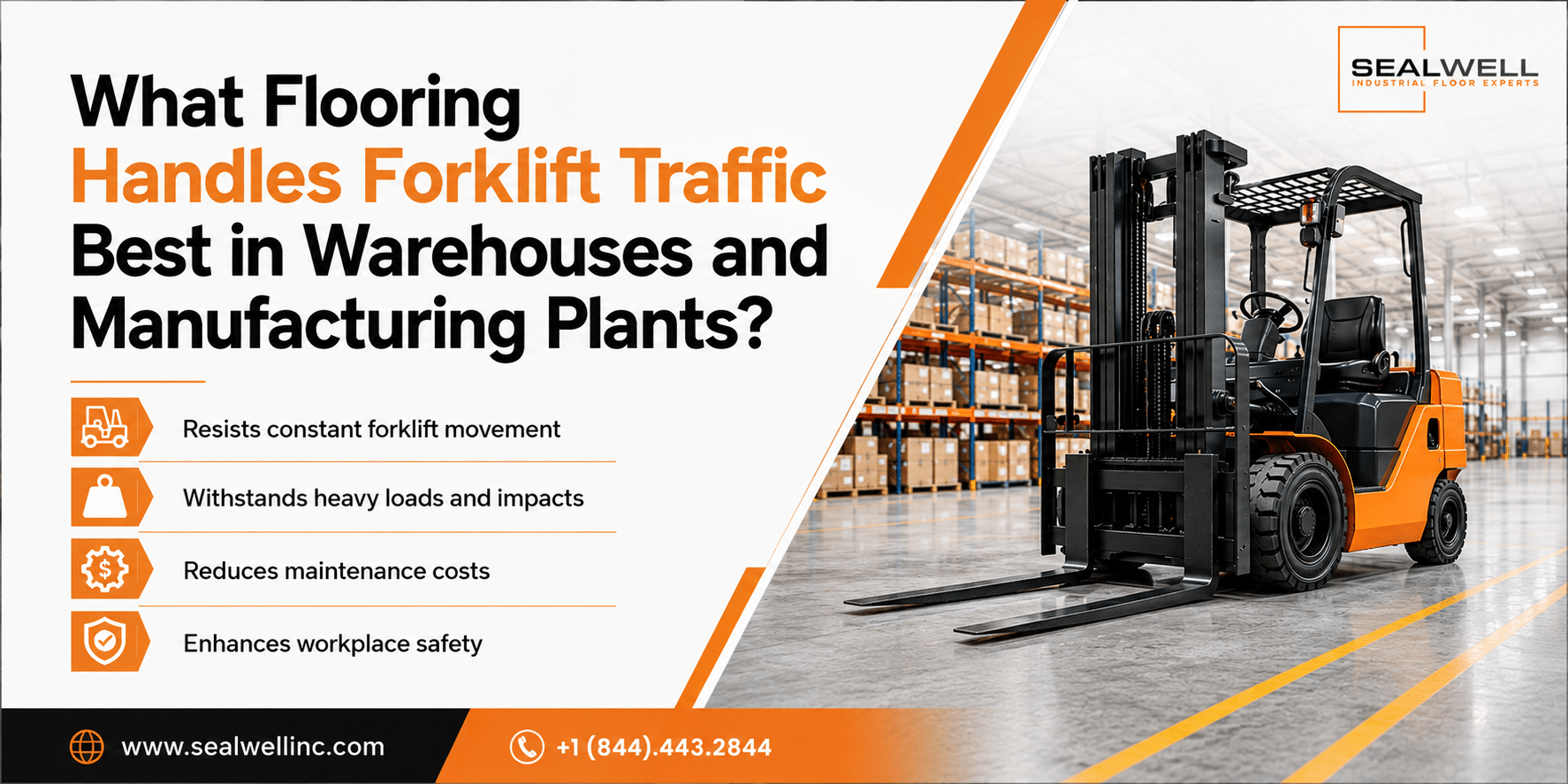
Forklifts are essential in warehouses and manufacturing plants, but they can be tough on floors. Daily turning, braking, pallet dragging, heavy loads, battery charging areas, oils, chemicals, and constant movement can quickly damage the wrong flooring system. Cracks, dusting concrete, tire marks, uneven surfaces, and slippery areas are not just maintenance issues. They can slow productivity, increase safety risks, and affect the professional appearance of your facility.
For facility managers, plant owners, operations teams, and property managers, the right floor is an investment in performance. The best flooring for forklift traffic should be strong, abrasion-resistant, easy to clean, safe under daily use, and suitable for the specific demands of your operation.
If you are evaluating Warehouse Flooring in Georgia, the most effective options typically include polished concrete, epoxy floor coatings, urethane cement systems, and hybrid resinous flooring systems. The right choice depends on traffic volume, forklift type, load weight, chemical exposure, moisture conditions, downtime limits, and the current condition of the concrete slab.
Sealwell helps commercial and industrial facilities choose flooring systems designed for real-world warehouse and manufacturing use.
Why Forklift Traffic Damages Warehouse Floors
Forklift traffic creates a combination of pressure, friction, impact, and vibration. Unlike foot traffic, forklifts concentrate heavy loads onto small wheel contact points. When forklifts turn sharply, the tires create shear force against the floor surface. Over time, this can wear down unprotected concrete or weak coatings.
Common forklift-related flooring problems include:
- Surface dusting from untreated concrete
- Tire marks and burnishing
- Cracks and joint damage
- Coating delamination
- Uneven traffic lanes
- Slippery areas caused by oils or moisture
- Pitting from impact or chemical exposure
- Floor failure around loading docks and staging zones
In high-traffic warehouses, even small floor problems can become expensive. Damaged floors may slow forklift movement, create trip hazards, damage equipment, and require repeated patching. That is why choosing the right Warehouse Flooring in Georgia is important for long-term facility performance.
Best Flooring Options for Forklift Traffic
-
Polished Concrete
Polished concrete is one of the most popular flooring options for warehouses and distribution facilities. It uses the existing concrete slab, which is mechanically ground, refined, densified, and polished to create a hard, smooth, low-maintenance surface.
For forklift traffic, polished concrete performs well because it improves the strength and abrasion resistance of the concrete surface. It also reduces concrete dusting, improves light reflectivity, and creates a clean professional look.
Best for:
Warehouses, distribution centers, logistics facilities, storage areas, retail warehouses, and dry manufacturing spaces.
Advantages:
Polished concrete is durable, cost-effective, easy to clean, and suitable for large square footage. It works especially well in facilities where forklifts travel in regular traffic lanes and where chemical exposure is limited.
Considerations:
Polished concrete is not always the best solution for areas exposed to harsh chemicals, standing liquids, food processing, heavy thermal shock, or frequent wet conditions. It also depends heavily on the condition of the existing concrete slab.
For many businesses searching for Warehouse Flooring in Georgia, polished concrete is a practical solution when the main priorities are durability, appearance, and maintenance efficiency.
-
Epoxy Floor Coatings
Epoxy flooring is a resinous coating system applied over properly prepared concrete. It creates a hard, protective surface that can resist wear, chemicals, stains, and impact. Epoxy systems are widely used in manufacturing plants, warehouses, automotive facilities, machine shops, and industrial work zones.
For forklift traffic, industrial-grade epoxy can provide a strong protective layer over concrete. It can also be customized with safety markings, traffic lanes, slip-resistant textures, and color-coded work areas.
Best for:
Manufacturing plants, industrial warehouses, maintenance areas, assembly zones, machine shops, and facilities needing chemical resistance.
Advantages:
Epoxy flooring offers excellent surface protection, improved appearance, chemical resistance, and easier cleaning. It can also help define pedestrian paths, forklift lanes, loading zones, and workstations.
Considerations:
Surface preparation is critical. If the concrete is not properly cleaned, profiled, and repaired before installation, coatings can peel or fail under forklift traffic. Epoxy may also require the right topcoat for UV exposure, abrasion resistance, or slip resistance.
When installed correctly, epoxy is one of the strongest choices for Warehouse Flooring in Georgia, especially in facilities where durability and chemical protection are high priorities.
-
Urethane Cement Flooring
Urethane cement flooring is a heavy-duty resinous flooring system designed for demanding industrial environments. It is especially useful in areas exposed to moisture, temperature changes, thermal shock, oils, food products, chemicals, and aggressive cleaning processes.
While polished concrete and epoxy are strong options, urethane cement is often preferred in harsher manufacturing environments. It can handle forklift traffic, wet conditions, and heavy-duty production requirements.
Best for:
Food and beverage plants, processing areas, chemical manufacturing, washdown zones, heavy industrial spaces, and wet production areas.
Advantages:
Urethane cement provides strong impact resistance, moisture tolerance, chemical resistance, and durability under demanding conditions. It can be installed with slip-resistant textures for safety in wet or oily environments.
Considerations:
It is generally more specialized than standard epoxy or polished concrete and may cost more upfront. However, in severe environments, it can reduce long-term repair costs and downtime.
For facilities that need high-performance Warehouse Flooring in Georgia, urethane cement may be the best option when forklifts operate in wet, hot, cold, or chemical-exposed areas.
-
Hybrid Resinous Flooring Systems
Some warehouses and manufacturing plants need a combination of flooring systems. For example, polished concrete may work well in general storage aisles, while epoxy or urethane cement may be better for production zones, loading docks, battery charging areas, maintenance rooms, or chemical storage areas.
A hybrid flooring plan allows each area of the facility to receive the right level of protection. This approach is often the most cost-effective because it avoids overbuilding low-risk areas while protecting high-impact zones.
Best for:
Large warehouses, mixed-use manufacturing plants, logistics facilities, and facilities with different operating conditions in different zones.
Advantages:
Hybrid systems can improve performance, control cost, increase safety, and extend the life of the facility floor.
Considerations:
A professional site visit is important to evaluate slab condition, traffic flow, forklift routes, drainage, moisture, joints, and operational downtime.
For companies comparing Warehouse Flooring in Georgia, a hybrid system may deliver the best balance between durability, cost, and long-term performance.
What Flooring Is Best for Heavy Forklift Traffic?
For heavy forklift traffic, the best flooring is usually a properly prepared and professionally installed industrial flooring system. In many dry warehouse environments, polished concrete is a strong and economical choice. In manufacturing areas where chemical resistance, impact resistance, or added safety markings are needed, epoxy flooring may be better. In wet, harsh, or temperature-variable production areas, urethane cement may be the most reliable option.
The best floor is not always one product. It is the system that matches your facility’s traffic, equipment, environment, and maintenance goals.
Before choosing a floor, consider:
- How many forklifts operate daily
- Whether forklifts use hard wheels or pneumatic tires
- Load weight and turning patterns
- Condition of the existing concrete
- Chemical, oil, or moisture exposure
- Cleaning methods
- Required slip resistance
- Available installation downtime
- Safety striping or traffic lane needs
- Long-term maintenance budget
Sealwell can evaluate these details during a consultation and recommend a floor plan that supports your operation.
Why Proper Surface Preparation Matters
Even the best coating or flooring material can fail if the concrete is not prepared correctly. Forklift traffic puts constant pressure on the bond between the flooring system and the slab. Dirt, oil, curing compounds, moisture, weak concrete, or old coatings can prevent proper adhesion.
Professional preparation may include:
- Concrete grinding or shot blasting
- Crack and joint repair
- Moisture testing
- Surface cleaning and degreasing
- Removal of failed coatings
- Profiling the concrete for proper bonding
- Applying primers, sealers, or topcoats as needed
This preparation helps the flooring system perform under heavy use. For long-lasting Warehouse Flooring in Georgia, installation quality is just as important as material selection.
Signs Your Warehouse Floor Needs Replacement or Restoration
Your flooring may need professional attention if you notice:
- Concrete dust on products, racks, or equipment
- Tire marks that are difficult to remove
- Peeling coatings
- Cracks spreading across traffic lanes
- Uneven surfaces near joints
- Pitting or spalling concrete
- Slippery areas
- Frequent patching needs
- Water or chemical damage
- Reduced brightness or poor facility appearance
Addressing these issues early can help prevent larger repair costs and operational interruptions.
How Sealwell Helps Warehouses and Manufacturing Plants
Sealwell provides seamless flooring solutions for industrial and commercial facilities in Florida and Georgia. The team works with warehouse and manufacturing environments that need durable, practical, and professional flooring systems.
For businesses looking for Warehouse Flooring in Georgia, Sealwell can help with:
- Floor assessment and consultation
- Concrete surface preparation
- Polished concrete systems
- Epoxy flooring systems
- Urethane and resinous flooring options
- Safety striping and traffic lane planning
- Floor repairs and restoration
- Customized floor plans based on facility use
Sealwell understands that every facility is different. A distribution center, fabrication shop, food production area, and automotive plant all place different demands on flooring. The goal is to recommend the right system for the right space, not a one-size-fits-all product.
Final Answer: What Flooring Handles Forklift Traffic Best?
The best flooring for forklift traffic depends on the operating environment. For dry warehouses and distribution centers, polished concrete is often an excellent choice. For manufacturing plants, machine shops, and industrial spaces that need more chemical and impact resistance, epoxy flooring is a strong solution. For wet, harsh, or temperature-sensitive production environments, urethane cement flooring may perform best.
If your facility has multiple zones, a hybrid flooring system may provide the best long-term value.
Choosing the right Warehouse Flooring in Georgia can improve safety, reduce maintenance, support productivity, and create a cleaner professional environment for employees, customers, and visitors.
Connect with Sealwell
Need help choosing the right flooring for forklift traffic in your warehouse or manufacturing plant?
Connect with the Sealwell team for a free consultation, site visit, and customized floor plan.
Sealwell can review your facility, evaluate your traffic patterns, and recommend a durable flooring system designed for your operation.
FAQ: Forklift Traffic & Warehouse Flooring
What is the best flooring for forklift traffic in warehouses?
The best flooring for forklift traffic is typically polished concrete, industrial epoxy, urethane cement, or a hybrid resinous flooring system. The right option depends on forklift volume, load weight, chemical exposure, moisture, and the condition of the concrete slab.
Is polished concrete good for forklift traffic?
Yes. Polished concrete is a strong option for many dry warehouses and distribution centers. It reduces concrete dusting, improves abrasion resistance, and creates a smooth, easy-to-clean surface for forklift movement.
Is epoxy flooring strong enough for forklifts?
Yes. Industrial-grade epoxy flooring can handle forklift traffic when the concrete is properly prepared and the system is installed correctly. Epoxy is especially useful in manufacturing plants, machine shops, and warehouses that need chemical resistance and safety markings.
What flooring is best for manufacturing plants?
Manufacturing plants often benefit from epoxy, urethane cement, or hybrid resinous flooring systems. These options can provide impact resistance, chemical protection, slip resistance, and durability for heavy equipment and forklift traffic.
What causes warehouse floors to fail under forklifts?
Warehouse floors often fail because of poor surface preparation, weak concrete, moisture problems, heavy turning patterns, chemical exposure, impact damage, or coatings that are not designed for industrial forklift traffic.
How long does warehouse flooring last with forklift traffic?
The lifespan depends on the flooring system, installation quality, traffic volume, maintenance routine, and operating conditions. A professionally installed industrial floor can last for years with proper care and the right system selection.
What is the safest warehouse flooring for forklifts?
The safest warehouse flooring is level, durable, slip-resistant, easy to clean, and designed for the facility’s traffic patterns. Safety can also be improved with line striping, traffic lanes, pedestrian walkways, and designated loading zones.
How do I choose the right warehouse flooring in Georgia?
Start with a professional site evaluation. Sealwell can inspect your concrete, review forklift traffic, identify problem areas, and recommend the best flooring system for your warehouse or manufacturing plant.
Can warehouse flooring be repaired without replacing the entire floor?
In many cases, yes. Cracks, joints, worn coatings, and damaged areas can often be repaired or restored. A professional assessment can determine whether repair, resurfacing, polishing, or a new coating system is the best solution.
Does Sealwell offer free flooring consultations?
Yes. You can connect with the Sealwell team for a free consultation, site visit, and floor plan for your warehouse or manufacturing facility.
SEALWELL INC
Phone No– +1 (844)-443-2844
Email- in*******@se*********.com
Let’s Connect: www.sealwellinc.com
Our trusted clients: