
Blog and News
Polished Concrete Floor vs. Epoxy Flooring: Which Is Better for Your Industrial Floor?
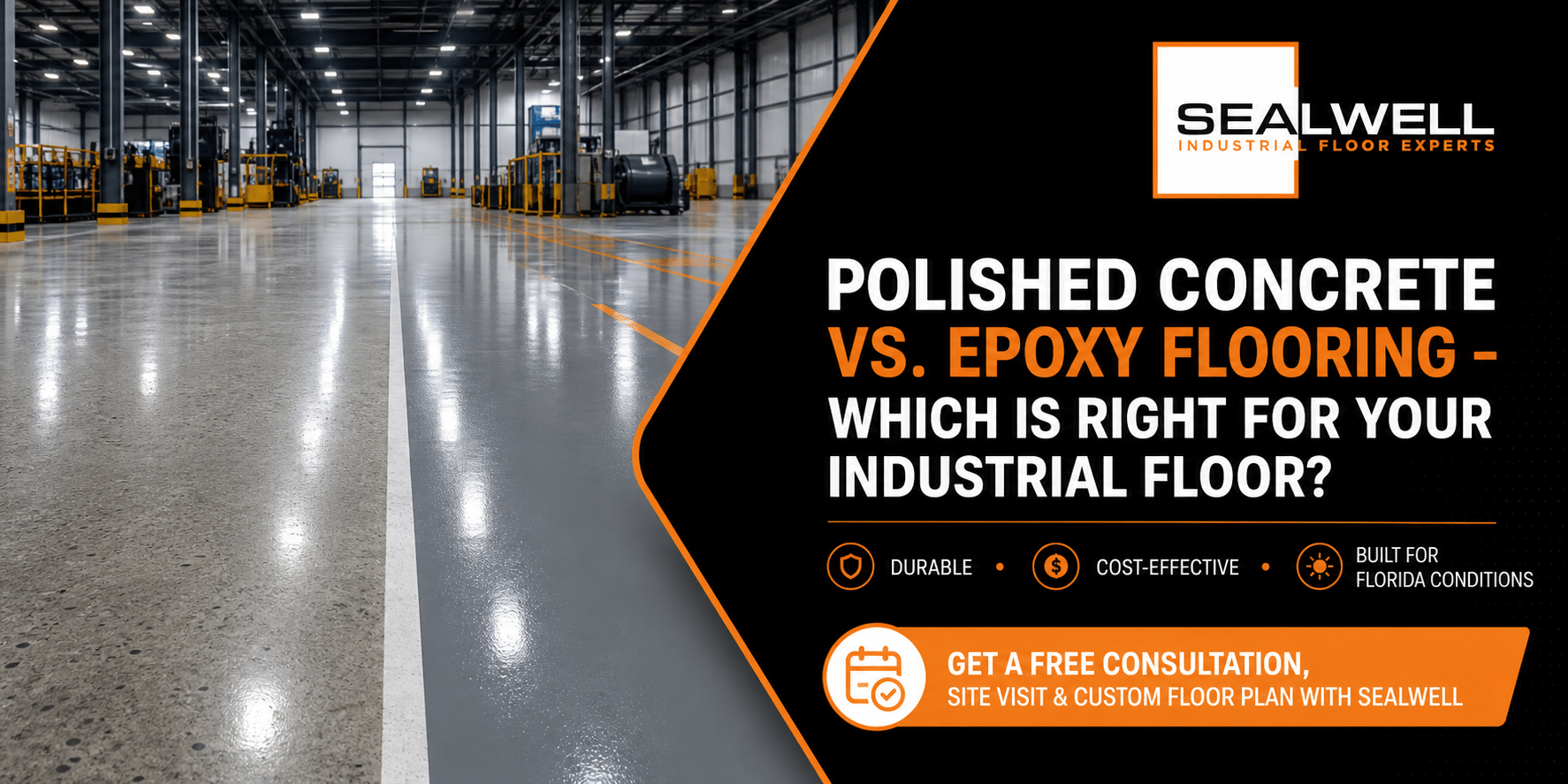
When it comes to choosing the right surface for industrial spaces, the decision often comes down to two popular options: polished concrete and epoxy flooring. Both offer durability and performance—but they serve different needs depending on your environment, usage, and long-term goals.
At Sealwell, we specialize in high-performance Industrial Flooring in Florida, helping businesses select the most efficient, cost-effective, and long-lasting solutions. In this guide, we’ll break down the differences between polished concrete and epoxy flooring to help you make an informed decision.
Understanding Polished Concrete Flooring
Polished concrete is created by mechanically grinding and polishing an existing concrete slab until it achieves a smooth, glossy finish. It’s widely used in industrial and commercial settings for its simplicity and durability.
Key Features of Polished Concrete
- Smooth, reflective surface
- Low maintenance requirements
- Long lifespan
- No additional coating layer
- Cost-effective initial installation
Advantages
Polished concrete is ideal for facilities that prioritize low maintenance and affordability. It doesn’t peel or chip since there’s no coating applied, and it offers decent resistance to heavy foot traffic.
Limitations
- Limited resistance to chemicals and stains
- Can be slippery when wet
- Lacks customization options
- May require frequent cleaning in high-dust environments
Understanding Epoxy Flooring
Epoxy flooring is a coating system applied over concrete surfaces to create a seamless, durable, and protective layer. It’s one of the most versatile solutions in Industrial Flooring in Florida.
Key Features of Epoxy Flooring
- Seamless and non-porous surface
- High chemical and stain resistance
- Customizable finishes (colors, textures, anti-slip)
- Strong adhesion to concrete
- high wear resistance
Advantages
Epoxy flooring excels in environments where durability, safety, and resistance are critical. It protects the underlying concrete while enhancing performance.
Limitations
- Requires proper surface preparation
- Slightly higher upfront cost compared to polished concrete
- Professional installation is essential
Polished Concrete vs. Epoxy Flooring: Side-by-Side Comparison
| Feature | Polished Concrete | Epoxy Flooring |
| Durability | High | Very High |
| Chemical Resistance | Low | Excellent |
| Maintenance | Low | Very Low |
| Customization | Limited | Extensive |
| Slip Resistance | Moderate | High (with additives) |
| Cost (Initial) | Lower | Moderate |
| Long-Term Value | Moderate | High |
For businesses evaluating Industrial Flooring in Florida, epoxy flooring often provides better long-term value due to its protective qualities and versatility.
Which Flooring Is Better for Industrial Use?
The answer depends on your specific operational needs.
Choose Polished Concrete If:
- You need a budget-friendly solution
- Your environment has minimal chemical exposure
- You prefer a simple, natural finish
- Maintenance requirements are low
Choose Epoxy Flooring If:
- Your facility handles chemicals, oils, or heavy machinery
- Safety is a priority (anti-slip options available)
- You want custom branding or color coding
- You need a long-lasting protective surface
For most industrial environments, epoxy flooring offers superior performance and protection, making it the preferred choice in demanding conditions.
Why Epoxy Flooring Is Popular in Florida
Florida’s climate presents unique challenges—heat, humidity, and heavy usage. Epoxy flooring is particularly suited for these conditions because it:
- Resists moisture and humidity
- Prevents concrete deterioration
- Withstands heavy loads and traffic
- Reduces dust and improves cleanliness
This makes epoxy a top solution for Industrial Flooring in Florida, especially in warehouses, manufacturing plants, and logistics centers.
Cost Considerations: Short-Term vs Long-Term
While polished concrete may have a lower upfront cost, it may require more maintenance and offer less protection over time.
Epoxy flooring, on the other hand:
- Reduces repair costs
- Extends floor lifespan
- Minimizes downtime
- Improves safety and efficiency
Over time, epoxy often proves to be the more cost-effective investment.
Maintenance Comparison
Polished Concrete
- Regular cleaning required
- Susceptible to staining
- Needs periodic re-polishing
Epoxy Flooring
- Easy to clean
- Resistant to spills and chemicals
- Minimal maintenance required
For industrial facilities looking to reduce operational interruptions, epoxy flooring offers a clear advantage.
Safety & Compliance
Safety is a critical factor in industrial environments.
Epoxy flooring provides:
- Anti-slip coatings
- High visibility markings
- Seamless surfaces that reduce hazards
Polished concrete, while durable, may become slippery and lacks these safety enhancements.
Why Choose Sealwell for Industrial Flooring in Florida?
At Sealwell, we don’t believe in one-size-fits-all solutions. Our team evaluates your facility, operations, and long-term goals to recommend the best flooring system.
What Sets Us Apart:
- Expertise in Industrial Flooring in Florida
- High-quality materials and advanced application techniques
- Customized solutions for every industry
- Commitment to durability, safety, and sustainability
Conclusion
Both polished concrete and epoxy flooring have their place in industrial settings. However, when it comes to durability, safety, customization, and long-term value, epoxy flooring stands out as the superior choice for most applications.
If you’re planning to upgrade your industrial space, choosing the right flooring can significantly impact performance, safety, and costs.
Get Expert Guidance Today
Ready to choose the best flooring solution for your facility?
Connect with the Sealwell team for a free consultation, site visit, and customized floor plan.
Let us help you find the perfect solution tailored to your industrial needs.
Frequently Asked Questions (FAQs)
What is the main advantage of polished concrete?
Polished concrete is cost-effective and low maintenance, making it suitable for low-impact environments.
Why is epoxy flooring popular in Florida?
Epoxy flooring performs well in Florida’s humid climate, offering moisture resistance and long-lasting durability.
Is epoxy flooring safe for industrial use?
Yes, epoxy flooring can include anti-slip coatings and safety markings, making it ideal for industrial settings.
How long does epoxy flooring last in industrial spaces?
With proper installation and maintenance, epoxy flooring can last 10–20 years or more.
Which flooring is easier to maintain?
Epoxy flooring is easier to maintain due to its non-porous, stain-resistant surface.
How do I choose the right industrial flooring?
Consider factors like usage, chemical exposure, safety requirements, and budget. Consulting experts like Sealwell ensures the best choice.
SEALWELL INC
Phone No– +1 (844)-443-2844
Email- in*******@se*********.com
Let’s Connect: www.sealwellinc.com
Our trusted clients: