
Blog and News
Why Do Automotive Facilities Need Epoxy and Urethane Flooring?
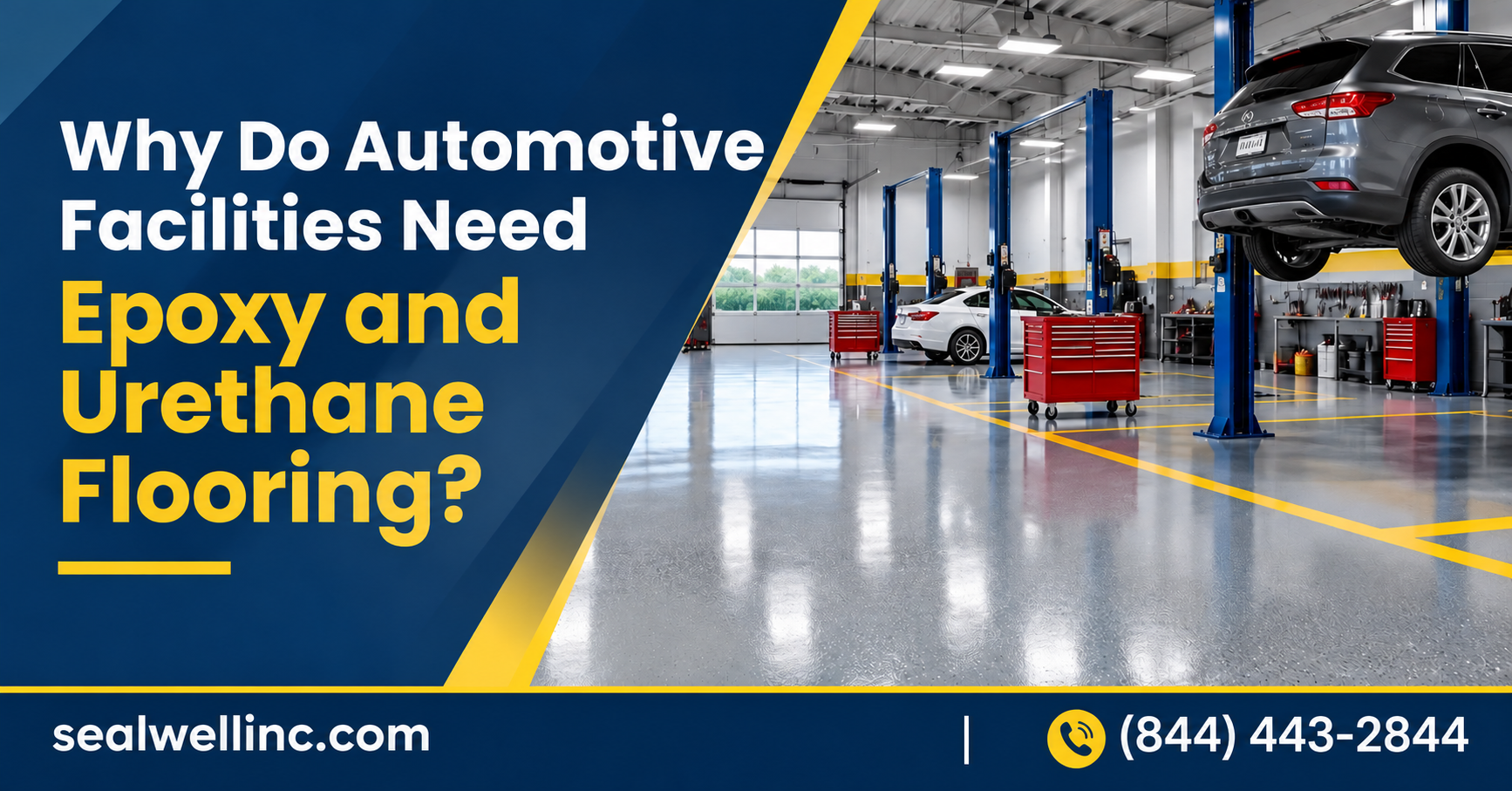
For automotive repair shops, service centres, dealerships, fleet facilities, manufacturing plants, and maintenance garages, Automotive Industry Flooring must withstand conditions that ordinary commercial floors may not be designed to handle. Oil, grease, fuel, solvents, cleaning chemicals, vehicle traffic, heavy equipment, dropped tools, and continuous employee movement can quickly damage untreated concrete. Epoxy and urethane flooring systems provide durable, seamless surfaces designed to help automotive facilities protect their floors while creating safer and easier-to-maintain work environments.
Choosing the right flooring is more than an aesthetic decision. The floor directly supports daily operations, employee safety, cleaning procedures, equipment movement, and facility maintenance. A properly selected and professionally installed system can help protect the underlying concrete and reduce the frequency of repairs.
Why Is Flooring Important in Automotive Facilities?
Automotive environments are exposed to demanding conditions every day. Service bays may receive vehicles throughout the day, while technicians work with oils, lubricants, coolants, solvents, brake fluids, and other automotive products.
The floor may also experience:
- Heavy vehicle traffic
- Forklifts and service equipment
- Tool and equipment impacts
- Oil and grease spills
- Chemical exposure
- Frequent cleaning
- Tire abrasion
- Hot or cold operating conditions
- High employee foot traffic
Untreated concrete can absorb liquids and become stained, deteriorated, dusty, or difficult to clean. Cracks and surface damage can also become more problematic when exposed to continuous traffic and chemical contamination.
A professionally installed resinous flooring system can create a protective surface between these operating conditions and the concrete substrate.
What Are the Benefits of Epoxy Flooring for Automotive Facilities?
Epoxy flooring is widely used in commercial and industrial environments because it can create a seamless, durable surface over properly prepared concrete.
For automotive facilities, key benefits can include:
Chemical and Fluid Resistance
Automotive facilities frequently deal with oils, lubricants, fuels, solvents, and cleaning products. A properly selected epoxy system can provide resistance against many common substances, depending on the specific formulation and exposure conditions.
This can help reduce staining and protect the concrete from prolonged exposure.
Heavy-Traffic Performance
Service bays and automotive workshops can experience constant vehicle movement. Forklifts, carts, jacks, and other equipment can also place significant stress on the floor.
A properly specified epoxy system can provide a durable surface designed for demanding traffic conditions.
Easy Cleaning
A seamless coated floor can be easier to clean than unfinished concrete. Spills and contaminants can generally be removed more efficiently when the surface is properly maintained.
This is particularly valuable in automotive environments where oil, grease, and other fluids are part of everyday operations.
Improved Appearance
A clean, professionally finished floor can make an automotive facility look more organised and professional.
Epoxy systems can also be available in different colours and finishes, allowing businesses to create designated work areas, safety pathways, equipment zones, and visual floor markings.
Why Consider Urethane Flooring for Automotive Facilities?
Urethane flooring systems can provide additional performance characteristics that make them suitable for demanding commercial and industrial environments.
Depending on the formulation, urethane systems may offer advantages related to:
- Abrasion resistance
- Chemical exposure
- Impact resistance
- Temperature changes
- Cleaning requirements
- Long-term wear
For automotive facilities that experience particularly demanding operating conditions, a urethane system may be considered either independently or as part of a multi-layer flooring system.
The appropriate choice depends on the facility’s specific requirements rather than assuming one flooring material is suitable for every application.
Epoxy vs. Urethane Flooring for Automotive Facilities
Both epoxy and urethane can be effective flooring options, but they are not identical. The right choice depends on traffic, chemicals, temperature, moisture, impact, maintenance, and other site conditions.
|
Factor |
Epoxy Flooring |
Urethane Flooring |
|
Durability |
High when properly specified and installed |
High, particularly for demanding environments |
|
Chemical Resistance |
Good to excellent depending on formulation |
Good to excellent depending on formulation |
|
Abrasion Resistance |
Good |
Often excellent |
|
Impact Resistance |
Good |
Can provide strong impact performance |
|
Temperature Exposure |
System dependent |
Can be suitable for certain temperature conditions |
|
Cleaning |
Easy with proper maintenance |
Easy with proper maintenance |
|
Appearance |
Multiple colours and finishes |
Multiple finish options |
|
Automotive Applications |
Service bays, workshops, garages |
Heavy-use service and industrial areas |
|
Best Selection Criteria |
Traffic, chemicals, substrate and use |
Wear, exposure, temperature and operational demands |
The table provides a general comparison. Actual flooring performance depends on the selected product, system design, substrate preparation, installation, and facility conditions.
How Does Flooring Improve Automotive Workplace Safety?
Safety is one of the most important considerations in an automotive facility.
Oil, grease, water, and other liquids can create slippery conditions. Damaged or uneven concrete can also create trip hazards. A properly designed flooring system can help create a more consistent surface and may incorporate appropriate slip-resistant textures where required.
Flooring can support workplace safety by:
- Providing appropriate surface traction
- Reducing surface deterioration
- Making spills easier to identify and clean
- Creating clearly marked work zones
- Improving visibility within service areas
- Reducing damaged or uneven walking surfaces
Slip resistance should always be selected according to the facility’s actual operating conditions. A highly textured surface may improve traction but can also affect cleaning requirements, so the right balance is important.
How Does Epoxy Flooring Protect Concrete?
Concrete is strong, but it is not immune to damage.
Repeated exposure to automotive fluids, impact, abrasion, moisture, and traffic can contribute to surface deterioration over time.
A properly installed protective flooring system can help reduce direct exposure of the concrete to these conditions.
Benefits may include:
- Reduced staining
- Improved surface protection
- Reduced dusting
- Easier cleaning
- Protection against everyday wear
- Extended useful life of the floor
However, coatings cannot compensate for a severely deteriorated substrate. Existing concrete conditions should be evaluated before installation.
Why Is Surface Preparation Critical?
One of the most important factors affecting flooring performance is preparation.
Before applying epoxy or urethane, the existing concrete should be evaluated for:
- Cracks
- Spalling
- Surface weakness
- Oil contamination
- Previous coatings
- Moisture
- Joint deterioration
- Uneven areas
Depending on the condition, preparation may include mechanical grinding, shot blasting, crack repair, joint treatment, cleaning, or removal of existing coatings.
Applying a high-performance coating over an unsuitable substrate can increase the risk of premature failure. Proper preparation creates the foundation for the new flooring system.
How Does Moisture Affect Automotive Flooring?
Moisture can be an important concern when installing resinous flooring systems.
Moisture vapor moving through concrete can contribute to coating adhesion problems, blistering, bubbling, or delamination under certain conditions.
Automotive facilities may have additional moisture exposure from:
- Vehicle washing
- Wet cleaning
- Plumbing leaks
- Ground-level moisture
- Rainwater entering service bays
- Humidity
- Washdown procedures
Before installation, the existing concrete should be evaluated and moisture testing considered where appropriate.
How Can Automotive Facilities Reduce Flooring Maintenance?
A good flooring system can reduce maintenance demands, but proper maintenance is still necessary.
Automotive facilities should establish a routine that includes:
Regular Cleaning
Remove dirt, oil, grease, and abrasive materials before they accumulate.
Prompt Spill Response
Clean chemical and automotive-fluid spills as soon as practical using compatible cleaning procedures.
Routine Inspections
Inspect high-traffic areas for cracks, chips, peeling, delamination, and surface wear.
Equipment Management
Maintain vehicle and equipment wheels to reduce unnecessary abrasion and floor damage.
Early Repairs
Address small areas of damage before they expand and require more extensive restoration.
Manufacturer-Recommended Maintenance
Use cleaning products and procedures appropriate for the installed flooring system.
Which Automotive Facilities Can Benefit From Epoxy and Urethane Flooring?
These flooring systems can be considered across a wide range of automotive environments, including:
- Auto repair shops
- Dealership service centres
- Fleet maintenance facilities
- Automotive manufacturing plants
- Vehicle inspection facilities
- Tire and wheel service centres
- Body shops
- Specialty vehicle facilities
- Transportation maintenance facilities
- Commercial garages
Each facility has different operating conditions, so flooring should be selected based on actual usage.
How Can Flooring Improve Facility Appearance?
Flooring contributes to the overall appearance of an automotive facility.
A clean, seamless floor can make service areas appear more organised and professional. Colour selection and floor markings can also help establish designated zones for vehicles, pedestrians, equipment, storage, and safety pathways.
For dealerships and customer-facing service centres, this can contribute to a stronger customer impression.
For manufacturing and fleet facilities, clear floor organisation can support operational efficiency and workplace visibility.
When Should an Automotive Facility Replace or Recoat Its Floor?
Not every damaged floor requires complete replacement.
Depending on the condition, a professional flooring contractor may recommend:
- Localised concrete repair
- Crack repair
- Surface preparation
- Recoating
- Resurfacing
- Polished concrete
- Epoxy flooring
- Urethane flooring
- Complete flooring replacement
The appropriate solution depends on the condition of the existing floor and the facility’s future requirements.
An inspection can help determine whether the existing flooring system can be restored or whether a new system is more appropriate.
Why Choose Sealwell for Automotive Flooring?
Selecting the right flooring system requires an understanding of both the material and the environment where it will be installed.
With more than 35 years of flooring industry experience, Sealwell provides commercial and industrial flooring solutions for demanding environments across Florida and Georgia, with expanding capabilities nationwide.
Our team evaluates factors such as:
- Existing concrete condition
- Vehicle and equipment traffic
- Chemical exposure
- Moisture
- Cleaning requirements
- Safety considerations
- Expected floor performance
- Facility downtime requirements
Based on these factors, Sealwell can help determine whether epoxy, urethane, polished concrete, MMA, concrete repair, or another flooring system is appropriate for the facility.
Conclusion
Automotive Industry Flooring needs to withstand much more than ordinary foot traffic. Oil, chemicals, vehicle movement, heavy equipment, impacts, moisture, and frequent cleaning can all affect an automotive facility’s floor. Epoxy and urethane flooring systems can provide durable, seamless, protective surfaces that support safety, easier maintenance, and long-term floor performance when properly selected and installed. If your automotive facility is experiencing floor damage, slippery surfaces, chemical staining, or excessive maintenance requirements, connect with the Sealwell team for a professional site visit, floor inspection, and maintenance consultation.
Frequently Asked Questions (FAQs)
What is the best flooring for an automotive repair shop?
Epoxy and urethane flooring are commonly considered for automotive repair shops because they can provide durable, seamless surfaces with resistance to wear, chemicals, and automotive fluids. The best system depends on the facility’s specific operating conditions.
Is epoxy flooring good for automotive service bays?
Yes. Properly specified epoxy flooring can be suitable for automotive service bays because it can provide durability, chemical resistance, easy cleaning, and a seamless protective surface.
Is urethane better than epoxy for automotive facilities?
Neither is universally better. Epoxy and urethane have different performance characteristics. The appropriate system depends on traffic, chemical exposure, abrasion, temperature, moisture, and other facility requirements.
Can epoxy flooring resist automotive oils and chemicals?
Many epoxy systems provide resistance to oils and chemicals, but performance depends on the specific product and exposure conditions. Facilities should identify the chemicals used before selecting a flooring system.
How long does automotive epoxy flooring last?
The service life varies according to installation quality, substrate preparation, traffic, chemical exposure, maintenance, and operating conditions. Proper selection and maintenance can help maximise flooring lifespan.
Can epoxy flooring make an automotive shop safer?
A properly designed flooring system can support workplace safety by providing a durable, maintainable surface and incorporating appropriate slip resistance and floor markings where needed.
Does concrete need to be repaired before epoxy flooring?
Often, yes. Cracks, spalling, contamination, weak concrete, moisture concerns, and other substrate problems should be evaluated and addressed before installing a new coating.
How should automotive epoxy flooring be maintained?
Regular cleaning, prompt spill removal, routine inspections, compatible cleaning products, and timely repairs can help maintain the floor’s appearance and performance.
Can Sealwell inspect an existing automotive facility floor?
Yes. Sealwell can evaluate existing commercial and industrial flooring to identify concrete damage, coating wear, moisture concerns, safety issues, and maintenance requirements.
Our trusted clients: