Blog and News
Why Industrial Coatings Are Essential for Safety & Performance
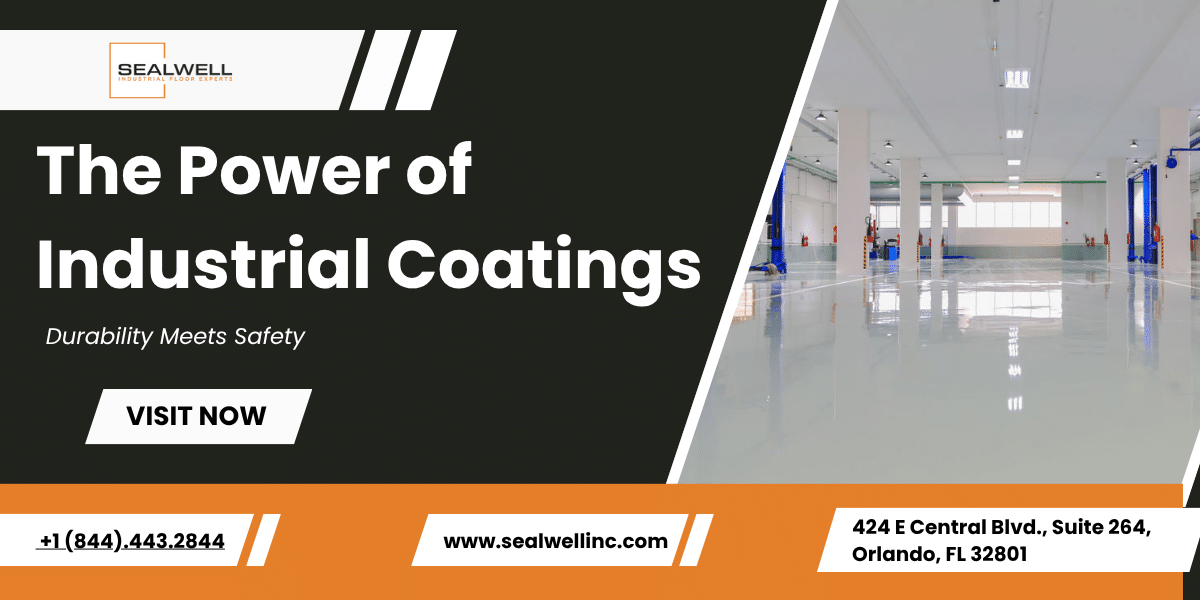
In factories, everything, from steel beams to concrete floors, is always under stress. Moisture, chemicals, wear and tear, and changes in temperature are always putting the safety of workers and the integrity of structures at risk. We at Sealwell believe that a well-chosen and expertly applied industrial coating does more than just make things look better. It also protects your facility and your people, and it saves you money and time.
In this article, we’ll talk about how industrial coatings make things safer, what mistakes to avoid, and how to pick the right solutions for your business needs.
Why Industrial Coatings Are Important for Safety and Performance
Not only are industrial coatings pretty, but they also protect. This is how:
- Protection against corrosion and oxidation : Over time, metal surfaces that are exposed to moisture and chemicals break down. A good coating makes a barrier that keeps oxidants out and stops rust from forming. This helps keep pipelines, equipment, and structural parts in good shape.
- Better durability and less wear: Coatings make things more resistant to mechanical stress, like abrasion, impacts, thermal cycles, and heavy use. That means surfaces will last longer and need fewer repairs.
3. Safer and Less Slippery Floors in factories and other industrial settings are prime places for accidents. Adding anti-slip chemicals to coatings can help keep employees safe by lowering the number of slip-and-fall accidents.
- Resistant to Chemicals and Solvents
In many industrial settings, surfaces are exposed to acids, oils, solvents, or harsh chemicals. High-performance coatings protect substrates from chemical attacks that would otherwise damage them.
- Help with compliance and rules
There are strict safety and environmental rules in many fields, like OSHA, EPA, and food safety. The right coating helps you stay in line by keeping surfaces safe, stopping chemical leaks, and lowering the risk of contamination.
- Easier to clean and keep up
Coated surfaces are smoother and less porous, which makes them easier to clean, stops dirt and grime from building up, and cuts down on maintenance work.
- Savings on Costs Over Time
Coatings are an upfront cost, but they help keep repairs, unplanned downtime, and structural replacements to a minimum. In the long run, the savings usually outweigh the cost.
Mistakes that happen a lot in industrial coating projects
Even the best materials don’t work if you use them wrong. Here are some common mistakes and how to avoid them:
Not Preparing the Surface Well
Not enough prep work is the main reason for many failures. Leftover moisture, grease, rust, or old coatings can stop things from sticking.
Choosing the Wrong Coating
If you use a generic coating when you need a specialty one (like one that is chemical-resistant, fire-retardant, or flexible), the coating will fail too soon.
Not paying attention to the environment
The temperature, humidity, and dew point at the time of application all have an effect on curing, adhesion, and the integrity of the film. Deviations can cause the coating to blister, peel, or be uneven.
Not enough professional oversight
Do-it-yourselfers or staff who aren’t well-trained may skip important steps or use coatings incorrectly. Independent inspections help find problems early.
Not Keeping an Eye on Things Long-Term
You should check a coating over time. If something breaks down, catching it early will limit the damage.
Important Safety Rules for Applying Coatings
Application itself poses risks—be careful:
Control of fumes and ventilation
A lot of coatings give off VOCs or solvents. To avoid being exposed to harmful substances, use exhaust systems, air filters, or forced ventilation.
Proper Personal Protective Equipment (PPE) Applicators should wear gloves, respirators, safety glasses, and coveralls, especially when working with specialty or solvent-based coatings.
Stay Safe from Fires and Explosions
When using flammable solvents or coating materials, you need to be very careful about starting a fire. There can’t be any open flames, sparks, or smoking nearby. Make sure fire extinguishers are easy to get to.
Strict Storage and Handling
Keep coatings in cool, labeled containers and away from extreme heat and chemicals that don’t mix. To avoid spills, use safe containment.
Keeping and calibrating equipment
Pumps, hoses, spray guns, and mixers that are well taken care of are less likely to leak, apply unevenly, or break down.
Emergency Procedures and Training
Workers should learn how to handle things safely, what to do in case of a spill, first aid, and emergency procedures. Drills on a regular basis help keep people ready.
Following the rules for proper disposal and the environment
Local laws say that leftover materials, rags, or empty containers must be thrown away properly. They should never be thrown into drains or on the ground.
Choosing the Right Coating for Your Environment
Different coating systems are needed for different uses. Here are some common groups:
Epoxy Coatings
Great for resisting chemicals, sticking to things, and wear and tear. Commonly used for floors in factories.
Coatings Made of Polyurethane
Good for being outside, resisting UV rays, and protecting against weathering.
Coatings with a lot of zinc in them
Give steel cathodic protection; if the coating layer rusts first, it protects the substrate.
Fire-Retardant and Intumescent Coatings
When heated, they expand to slow the spread of fire. This is very important in high-risk areas or when building structural steel.
Thermoset Systems and Powder Coatings
These coatings don’t have any solvents in them, so they make thick, long-lasting films with low VOCs.
The right mix depends on things like chemical exposure, temperature changes, mechanical wear, safety needs, and the materials used for the substrate.
New Ideas and Trends for the Future
Industrial coatings are changing quickly. Some new trends are:
Smart or self-sensing coatings
Coatings that change color or how they respond to electronics when corrosion starts or cracks form, giving hints for predictive maintenance.
Formulations that are low in VOCs and good for the environment
New technology is making coatings that have less of an effect on the environment while still working well.
Coatings with Nanotechnology
Nanomaterials make things stick better, act as barriers, and heal themselves.
Thermal Spray and Hybrid Technologies
Thermal spraying and other methods make thick, wear-resistant coatings. Hybrid systems add polymer topcoats to these coatings.
These new ideas lead to coatings that are safer, last longer, and are smarter.
How Sealwell Provides Safe and Reliable Coating Solutions
At Sealwell, our goal is simple: to combine high-performance coatings with strict safety standards and unmatched application knowledge. Here are the steps we take:
Review of Hazards and Site Assessment
Before we recommend a coating system, we check the conditions of your facility, such as the humidity, chemistry, and mechanical exposure.
Choosing the Right Product
We choose coatings based on the specific problems you face, like abrasion, solvents, or fire risk.
Professional Surface Preparation and Application
We follow strict rules for abrasive blasting, cleaning, curing windows, and quality control.
Plans for regular inspections and maintenance
After installation, we check the coatings and suggest repairs or touch-ups on a regular basis before they completely fail.
We make sure your coating works as it should by combining technical know-how with high safety standards. This protects your investment, your infrastructure, and your team.
In factories, safety and durability are not up for debate. A good industrial coating program is the basis, not an afterthought. Coatings are very important for modern facility management because they protect surfaces from corrosion, lower the number of accidents, and meet government requirements.
Let’s partner to elevate your facility’s safety and performance. Connect with Sealwell today and get a detailed site visit, a floor plan evaluation, and a full estimate within the next 24 hours. Your facility’s future depends on the right protection now.
SEALWELL INC
Phone No– +1 (844)-443-2844
Email- in*******@se*********.com
Let’s Connect: www.sealwellinc.com
Our trusted clients: