Automotive Industry Flooring
Automotive Industry Flooring Solutions for Manufacturing Plants, Assembly Lines & EV Facilities
High-Performance Flooring Built for Automotive Production, Heavy Equipment & Demanding Industrial Environments.
Automotive Industry Flooring plays an essential role in supporting safe, efficient, and reliable operations across vehicle manufacturing plants, electric vehicle (EV) production facilities, automotive assembly lines, and component manufacturing centers.
Automotive facilities require durable flooring systems that can withstand heavy machinery, forklift traffic, chemical exposure, impact, abrasion, and continuous production activities.
At Sealwell Inc., we provide specialized industrial flooring solutions, including epoxy, polyurethane, urethane cement, ESD flooring, and concrete polishing, designed to meet the diverse operational requirements of automotive and EV manufacturing environments.
Whether you’re upgrading an existing production facility, repairing damaged concrete, or planning a new automotive manufacturing plant, our flooring experts help you select the appropriate system for long-term durability, safety, and operational efficiency.
Proudly Serving Florida & Georgia, with Expanding Nationwide Service Capabilities.
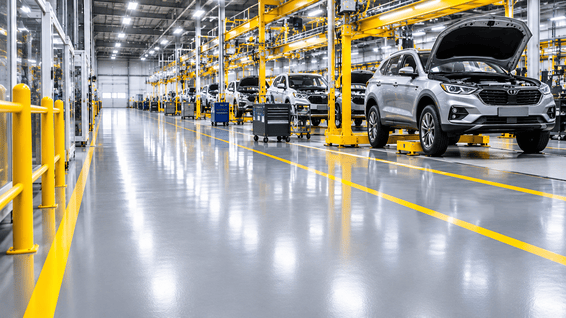
Automotive Industry Flooring Features for Modern Manufacturing & EV Production Facilities
Automotive Industry Flooring must deliver exceptional durability, chemical resistance, abrasion protection, and reliable surface performance to support the demanding conditions found in vehicle manufacturing environments.
From traditional automotive production lines to advanced EV battery assembly facilities, industrial floors must accommodate heavy equipment, automated material handling systems, frequent cleaning, and specialized manufacturing processes.
Sealwell offers flooring solutions designed around the following performance requirements:
- Heavy-Duty Load & Impact Resistance
Automotive manufacturing floors must withstand forklifts, industrial machinery, rolling equipment, material handling systems, and repeated operational loads.
High-performance epoxy and other industrial flooring systems help protect concrete surfaces against abrasion and impact. Structural loads must be supported by the underlying concrete slab.
- Chemical, Oil & Fluid Resistance
Vehicle manufacturing and maintenance facilities may be exposed to oils, lubricants, hydraulic fluids, coolants, solvents, and cleaning chemicals.
Chemical-resistant resinous flooring systems help protect concrete substrates against specified chemicals when the coating formulation matches the facility’s exposure conditions.
- Slip-Resistant Surface Options
Automotive production environments require appropriate traction in areas exposed to moisture, oils, and other contaminants.
Textured epoxy and polyurethane systems can incorporate slip-resistant aggregates to improve surface traction while supporting routine cleaning.
- Abrasion & Wear Resistance
Continuous forklift movement, equipment traffic, and production activities can accelerate concrete deterioration.
Industrial-grade flooring systems provide protective surfaces designed to withstand repeated traffic and reduce premature wear.
- Seamless & Easy-to-Clean Finishes
Seamless resinous flooring reduces surface joints and irregularities that can collect dust, dirt, and contaminants.
These systems help simplify cleaning and maintenance across production lines, assembly areas, and manufacturing workspaces.
- Electrostatic Discharge (ESD) Control
EV manufacturing and automotive electronics facilities may require specialized flooring to manage electrostatic discharge.
Properly designed ESD flooring systems help control static electricity in areas handling sensitive electronic components, battery management electronics, and specialized production equipment.
- Customized Safety Markings & Work Zones
Industrial flooring can incorporate designated walkways, equipment zones, safety boundaries, and color-coded work areas.
These features help improve visual organization and support facility traffic management.
- Moisture & Temperature Resistance
Selected polyurethane and urethane cement flooring systems provide resistance to moisture, cleaning procedures, and temperature fluctuations.
System selection depends on the facility’s actual exposure conditions and operating requirements.
Automotive Flooring Applications Across Manufacturing Facilities
Different automotive production areas require flooring systems with specific performance characteristics. Sealwell provides customized solutions for a wide range of automotive and EV manufacturing applications.
- Automotive Assembly Lines
Durable epoxy and polyurethane flooring systems help protect concrete surfaces exposed to continuous production activity, equipment movement, and assembly operations.
Key Requirements: Abrasion resistance, durability, cleanability, and heavy-traffic performance.
- Electric Vehicle (EV) Manufacturing Facilities
EV production environments may require specialized flooring for battery-related operations, electronics assembly, and advanced manufacturing processes.
Chemical-resistant and ESD flooring systems can be selected for areas where these performance characteristics are necessary.
Key Requirements: Appropriate chemical resistance, electrostatic control, durability, and specialized surface protection.
- Automotive Parts & Component Manufacturing
Automotive component facilities require flooring capable of handling machinery, equipment traffic, lubricants, and repeated operational wear.
Heavy-duty resinous systems provide durable, protective surfaces for demanding manufacturing environments.
Key Requirements: Impact resistance, abrasion protection, chemical resistance, and easy maintenance.
- Vehicle Paint Shops & Coating Areas
Paint preparation and coating facilities require flooring suited to cleaning chemicals, paint materials, and operational contamination.
Appropriately specified chemical-resistant resinous flooring systems can help protect the underlying concrete and support cleaning procedures.
Key Requirements: Chemical compatibility, cleanability, surface durability, and applicable static-control requirements.
- Automotive Testing & Quality Control Areas
Vehicle testing and quality inspection facilities benefit from smooth, durable surfaces that support equipment movement and organized work areas.
Key Requirements: Surface consistency, abrasion resistance, cleanability, and operational durability.
- Warehouses & Automotive Distribution Centers
Automotive warehouses and parts distribution facilities experience forklift traffic, pallet movement, and continuous material handling.
Polished concrete, heavy-duty epoxy, and suitable protective flooring systems can help improve surface durability and maintenance efficiency.
Key Requirements: Wear resistance, load suitability, forklift traffic performance, and long-term maintenance.
- Automotive Maintenance & Repair Facilities
Vehicle service and maintenance areas may be exposed to oils, lubricants, hydraulic fluids, tools, and equipment impacts.
Chemical-resistant epoxy and polyurethane flooring systems can provide durable surfaces designed for frequent cleaning.
Key Requirements: Chemical resistance, slip resistance, abrasion protection, and cleanability.
- Robotics & Automated Production Areas
Automated manufacturing environments require flooring compatible with robotic equipment, automated guided vehicles (AGVs), and precision material handling systems.
The appropriate flooring system should account for surface flatness, equipment loads, abrasion, and the operational requirements of automated systems.
Key Requirements: Surface flatness, durability, abrasion resistance, and equipment compatibility.
Comparing the Best Flooring Systems for Automotive & EV Manufacturing Facilities
Choosing the right flooring system depends on production activities, chemical exposure, machinery loads, traffic patterns, and maintenance requirements.
The following comparison helps automotive facility managers evaluate common industrial flooring options.
|
Flooring System |
Best Applications |
Key Advantages |
Maintenance Requirements |
|
Epoxy Flooring |
Assembly lines, manufacturing plants, service bays |
Durable, abrasion-resistant, chemical-resistant options |
Low |
|
Polyurethane Flooring |
Production areas, vehicle service facilities |
Wear resistance, protective finish options |
Low |
|
Urethane Cement Flooring |
Washdown areas, chemical processing zones |
Moisture, chemical and thermal resistance |
Low |
|
ESD Flooring |
EV electronics production, sensitive component assembly |
Controlled electrostatic dissipation |
Specialized |
|
Polished Concrete |
Warehouses, logistics centers, distribution facilities |
Durable, easy to maintain, long service potential |
Low |
|
Concrete Repair & Resurfacing |
Damaged manufacturing floors, aging facilities |
Restores deteriorated surfaces, supports continued use |
Varies |
Which Flooring Is Best for Automotive Manufacturing?
Epoxy flooring is a practical option for many automotive production and assembly areas because of its durability, abrasion resistance, and available chemical-resistant formulations.
Polyurethane systems can provide additional protective performance, while urethane cement is appropriate for selected wet-processing environments.
ESD flooring may be necessary for sensitive electronics manufacturing, whereas polished concrete can be suitable for warehouses and logistics areas.
The best flooring system depends on the facility’s production processes, substrate condition, chemical exposure, and operational requirements.
Benefits of High-Performance Automotive Industry Flooring
Investing in the appropriate flooring system helps automotive manufacturers protect their facilities, improve maintenance efficiency, and support safer production environments.
- Enhanced Workplace Safety
Slip-resistant surface options, designated walkways, and appropriate flooring textures help support safer movement for employees and equipment.
- Long-Term Durability
Industrial flooring systems provide protection against abrasion, impact, equipment movement, and continuous operational wear.
- Improved Chemical Resistance
Specialized resinous coatings help protect concrete from selected automotive oils, lubricants, coolants, and manufacturing chemicals.
- Reduced Maintenance Requirements
Seamless, easy-to-clean flooring systems can simplify routine maintenance and help reduce surface deterioration when properly maintained.
- Protection Against Concrete Damage
Protective coatings and timely repairs help reduce the effects of surface wear, chemical penetration, and localized concrete deterioration.
- Support for EV & Advanced Manufacturing
Specialized ESD and chemical-resistant systems can address selected requirements associated with automotive electronics and EV component production.
- Improved Facility Organization
Color-coded flooring, safety markings, and designated traffic zones help support organized manufacturing operations.
- Flexible Installation & Reduced Operational Disruption
Flooring installation can be coordinated around planned shutdowns, maintenance windows, weekends, and customized production schedules.
Why Choose Sealwell for Automotive & EV Manufacturing Flooring?
Automotive manufacturing facilities require more than standard commercial flooring. They need carefully specified systems that can support demanding production activities, equipment traffic, and long-term operational requirements.
With over 35 years of industrial and commercial flooring experience, Sealwell provides customized flooring solutions focused on durability, safety, professional installation, and long-term value.
What Makes Sealwell Different?
- 35+ Years of Industrial Flooring Experience
Our experience in industrial concrete preparation, protective coatings, repairs, and flooring installation supports demanding commercial and manufacturing environments.
- NFSI Certified Company
Sealwell emphasizes flooring safety, appropriate surface selection, and responsible installation practices.
- Customized Automotive Flooring Solutions
We recommend flooring systems based on facility operations, chemical exposure, equipment traffic, and substrate conditions.
- Specialized Flooring for EV & Advanced Manufacturing
Our flooring solutions include chemical-resistant resinous systems and ESD flooring options for applications requiring electrostatic control.
- Flexible Scheduling to Minimize Production Disruption
Sealwell can coordinate installation during planned shutdowns, night shifts, weekends, and customized working hours, depending on project requirements.
- Complete Industrial Flooring Services
From floor inspections and surface preparation to installation, repairs, resurfacing, and maintenance, Sealwell supports facilities throughout their flooring lifecycle.
- Florida & Georgia Service Coverage
We serve industrial and commercial facilities across Florida and Georgia, including Orlando, Jacksonville, Tampa, and Atlanta, with expanding nationwide capabilities.
Frequently Asked Questions (FAQs)
- What is the best flooring for automotive manufacturing plants?
High-performance epoxy flooring is a common choice for automotive manufacturing facilities because it offers durability, abrasion resistance, and chemical-resistant options. Polyurethane, urethane cement, ESD flooring, and polished concrete may be more appropriate for specific production areas.
- Is epoxy flooring suitable for automotive assembly lines?
Yes. Properly specified epoxy flooring can provide durable, seamless surfaces for automotive assembly lines. The flooring system should be selected based on equipment loads, traffic patterns, chemical exposure, and the condition of the concrete substrate.
- What flooring is recommended for electric vehicle manufacturing facilities?
EV manufacturing facilities may use epoxy, polyurethane, chemical-resistant resinous systems, and ESD flooring depending on the production area. Sensitive electronics assembly and certain battery-related operations may require specialized electrostatic control or chemical resistance.
- Can automotive flooring resist oils, chemicals, and hydraulic fluids?
Yes. Specialized epoxy and polyurethane flooring systems can resist selected oils, lubricants, coolants, and hydraulic fluids. Chemical resistance depends on the product formulation, concentration, temperature, and duration of exposure.
- What is the difference between epoxy flooring and polyurethane flooring?
Epoxy flooring is commonly selected for its adhesion, durability, and chemical-resistant formulations. Polyurethane flooring systems and topcoats can offer different flexibility, abrasion resistance, UV stability, and protective characteristics. The appropriate system depends on the application.
- Is ESD flooring necessary for EV battery manufacturing?
ESD flooring may be required in areas handling electrostatic-sensitive components or where a documented process risk assessment identifies the need for static control. It is not automatically required throughout an entire EV battery manufacturing facility. Flooring specifications should follow applicable equipment, safety, and process requirements.
- How long does automotive industrial flooring last?
Flooring lifespan depends on system selection, installation quality, machinery loads, traffic intensity, chemical exposure, and maintenance practices. Properly installed industrial flooring systems can provide many years of service, with periodic inspections and repairs as needed.
- Can automotive factory floors be repaired instead of replaced?
Yes. Many damaged concrete floors can be repaired or resurfaced when the underlying substrate remains structurally suitable. Sealwell can evaluate cracks, worn coatings, surface deterioration, and moisture concerns to recommend an appropriate solution.
- Can flooring installation be completed without stopping automotive production?
Some projects can be completed in phases or during planned maintenance shutdowns. Sealwell offers flexible scheduling, including night shifts and weekends, where practical. Downtime depends on preparation, application, curing, and facility safety requirements.
- How much does automotive manufacturing flooring cost?
Costs depend on square footage, concrete condition, surface preparation, coating type, chemical resistance requirements, installation thickness, and project scheduling. Sealwell provides project-specific estimates based on facility needs.
- Does Sealwell provide flooring services outside Florida and Georgia?
Sealwell serves industrial and commercial facilities throughout Florida and Georgia and is expanding its nationwide service capabilities. Contact our team to discuss project requirements and availability in other U.S. locations.
Let’s Discuss Your Automotive & EV Industry Flooring Project!
Whether you’re upgrading an automotive assembly plant, planning flooring for an EV manufacturing facility, repairing damaged concrete, or installing protective coatings in a vehicle production environment, Sealwell’s industrial flooring experts can help you select the right solution.
Our team provides professional floor inspections, installation, repairs, resurfacing, and maintenance services tailored to automotive manufacturing and advanced industrial environments.
Schedule Your FREE Floor Inspection Today!
Tell us about your automotive or EV manufacturing facility’s flooring requirements. Our team will evaluate your facility’s needs, discuss your project scope, and recommend suitable flooring solutions. Fill out the form below to connect with Sealwell’s flooring experts today!
Our trusted clients: