Blog and News
Antimicrobial Concrete Floor Coatings: Safer Spaces for Food and Medical Facilities
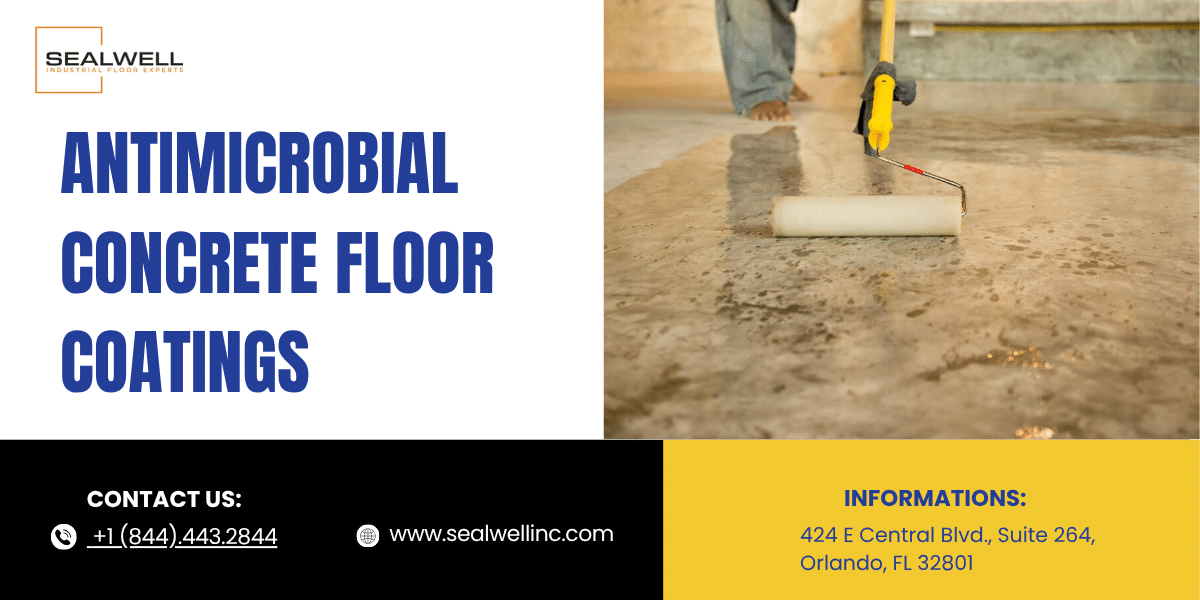
In the high-stakes world of food processing plants, hospitals, pharmaceutical facilities and commercial kitchens, maintaining an ultra-clean, hygienic floor surface is far more than a matter of aesthetics—it’s a vital part of infection control, safety compliance and brand reputation. At Sealwell Inc., we understand that your flooring system needs to deliver durability, ease of maintenance and a tangible contribution to hygiene protocols. That’s why antimicrobial concrete floor coatings are fast becoming a smart investment for facilities where sanitation is non-negotiable.
What Are Antimicrobial Concrete Floor Coatings?
Unlike standard floor coatings, an antimicrobial concrete floor system incorporates special additives (often ionic silver or other antimicrobial agents) into the top coat of epoxy, polyurethane, polyaspartic or urethane-cement systems. These additives don’t replace your cleaning program—but they enhance the surface’s resistance to bacterial growth, helping prevent microbes from proliferating on the floor.
Because the antimicrobial agent becomes part of the coating film, the system retains its original performance—clear finishes stay clear, colour remains consistent, and durability is unaffected.
Why These Coatings Matter for Food & Medical Facilities
- Hygiene as a Floor Feature
In food-handling environments and medical settings, even the floor can become a hidden reservoir for microbes unless it’s sealed and treated appropriately. Non-porous, antimicrobial surfaces help reduce the risk of bacterial and fungal growth in microscopic crevices. - Compliance and Documentation
Many facilities operate under the scrutiny of agencies such as the U.S. Food & Drug Administration (FDA), the U.S. Department of Agriculture (USDA) and the Occupational Safety and Health Administration (OSHA). Using antimicrobial coatings and keeping documented proof of installation can help demonstrate proactive hygiene measures during inspections. - Durability, Cleanability & Reputation
These coatings support easy cleaning protocols, shorter downtime for maintenance, and a visible signal to staff, patients, customers and regulators that you’ve taken extra steps for hygiene and safety.
How Do They Work?
The antimicrobial additive is embedded in the coating’s finish layer. Here’s the breakdown:
- The additive (commonly ionic silver) creates conditions in which bacteria and other microbes cannot multiply effectively.
- Because it’s integrated into the coating matrix, the additive does not alter the coating’s appearance, chemical resistance or durability.
- The efficacy remains for as long as the coating remains intact—meaning the protection lasts for the system’s service life, typically several years.
It’s important to note: antimicrobial coatings do not replace standard cleaning and disinfecting. They add an extra measure of protection—they don’t eliminate the need for sanitation protocols.
Common Systems & Considerations
The compatibility of antimicrobial additives is broad, which gives facility managers flexibility in system selection:
- Epoxy floor coatings
- Polyurethane
- Polyaspartic
- Urethane cement topcoats
However, certain substrate or structural conditions—such as cementitious overlays that don’t bond well with the additive—may require special planning. Always engage a flooring professional to evaluate the substrate, traffic loads, chemical exposure and hygiene requirements.
Where These Systems Shine
Facilities and environments that stand to benefit most include:
- Food & Beverage Processing: Production lines, bottling, packaging zones where microbial contamination must be strictly controlled.
- Healthcare Facilities: Operating theatres, sterilisation zones, patient restrooms, kitchens—anywhere infection control is critical.
- Commercial Kitchens & Cafeterias: High-traffic areas with frequent cleaning and sanitising; antimicrobial flooring adds a protective layer.
- Institutions & Educational Cafeterias: Large-volume foot traffic and food service demand surfaces that support rigorous hygiene.
Addressing Common Misconceptions
“Does this mean I can stop cleaning?” No. These coatings support sanitation—they don’t replace it. Routine cleaning and disinfecting are still essential.
“Will the coating perform differently or look different?” No. The antimicrobial additive does not affect appearance, finish performance or durability when installed correctly.
“Is it too expensive?” Typically, the added cost of antimicrobial properties is modest compared with the total investment—often only a small incremental material cost.
Real-World Impact & ROI
When you consider the cumulative costs of compliance failures, sanitation violations, downtime, rework or reputational damage from hygiene issues, an antimicrobial floor coating can deliver a compelling return—not just in dollars, but in risk mitigation. For food plants or medical facilities, the floor is a continuously trafficked, often cleaned and exposed surface—making it a strategic candidate for upgrade.
At Sealwell Inc., we collaborate with clients to tailor these solutions—matching coating systems not just to the hygiene protocol but to traffic loads, chemical exposure, slip resistance and maintenance regimes.
Next Steps for Your Facility
If your facility is seeking to elevate its hygiene profile, reduce inspection risk, improve cleanability and demonstrate a commitment to safer environments, taking action now gives you a competitive edge. Consider questions such as:
- What are our current hygiene or inspection pain-points on the floor surface?
- Does our existing flooring allow for seamless cleaning and microbial control?
- Could a high-performance, antimicrobial-infused floor system align with our maintenance and operational budgets?
- How will the coating integrate with our cleaning/disinfection protocols and facility schedule?
If you’re considering antimicrobial coatings for your facility, we’d love to help you explore your options. Request a free consultation to learn more and let Sealwell Inc. partner with you to create safer, compliant, high-performance floor surfaces for your food or medical facility.
SEALWELL INC
Phone No– +1 (844)-443-2844
Email- in*******@se*********.com
Let’s Connect: www.sealwellinc.com
Our trusted clients: